
Maximizing 2026 Deductions: Insider Strategies for Small Business Owners to Save Up to 15%
As a small business owner, navigating the complex world of taxes can often feel like a daunting task. Yet, it’s also an area ripe with opportunities to significantly boost your bottom line. With 2026 on the horizon, now is the perfect time to delve into insider strategies that can help you maximize your small business deductions and potentially save up to 15% on your tax bill. This isn’t just about finding a few extra write-offs; it’s about a holistic, proactive approach to financial planning that leverages every available tax advantage.
The landscape of tax laws is constantly evolving, and staying ahead of the curve is crucial. Many small business owners leave money on the table simply because they aren’t aware of all the legitimate deductions they’re entitled to. This comprehensive guide will illuminate the path to greater tax efficiency, covering everything from foundational principles to advanced tactics. We’ll explore new legislative changes, highlight often-overlooked expenses, and provide actionable advice to ensure you’re well-prepared for the 2026 tax season.
Our goal is to empower you with the knowledge and tools to not only comply with tax regulations but to strategically optimize your financial position. By understanding and implementing these insider strategies, you can transform tax time from a period of stress into an opportunity for substantial savings and reinvestment into your business. Let’s unlock the full potential of your small business deductions for 2026.
Understanding the Foundation of Small Business Deductions
Before diving into specific strategies, it’s essential to grasp the fundamental principles governing small business deductions. The IRS generally allows businesses to deduct ordinary and necessary expenses incurred during the tax year. An expense is considered ‘ordinary’ if it is common and accepted in your industry, and ‘necessary’ if it is helpful and appropriate for your business. It doesn’t have to be indispensable to be considered necessary. This broad definition opens the door to a wide range of deductible items, but careful record-keeping is paramount.
The Importance of Accurate Record-Keeping
The cornerstone of maximizing your small business deductions is impeccable record-keeping. Without proper documentation, even the most legitimate expenses can be disallowed by the IRS. This includes receipts, invoices, bank statements, and mileage logs. Consider using accounting software or hiring a bookkeeper to streamline this process. Digital records are often preferred as they are less prone to loss or damage and can be easily organized and retrieved.
Beyond simply keeping records, it’s crucial to categorize them correctly. Understanding which expenses fall into which deductible category can make a significant difference during tax preparation. This proactive approach not only simplifies tax filing but also provides a clear financial picture of your business throughout the year, enabling better decision-making.
Key Changes and Updates for 2026
Tax laws are not static. While major overhauls might not happen every year, subtle changes and interpretations can significantly impact your small business deductions. It’s imperative to stay informed about any new legislation or IRS guidance that specifically affects small businesses for the 2026 tax year. Subscribing to tax news alerts, consulting with a knowledgeable tax professional, and regularly checking IRS publications are excellent ways to remain updated. For instance, there might be adjustments to depreciation schedules, changes in business interest expense limitations, or new credits available for specific types of investments or activities. Proactive research can uncover new opportunities for savings.
Leveraging Common Small Business Deductions
Many small business deductions are universally applicable, yet often underutilized. Let’s explore some of the most common and how you can ensure you’re taking full advantage of them.
Home Office Deduction
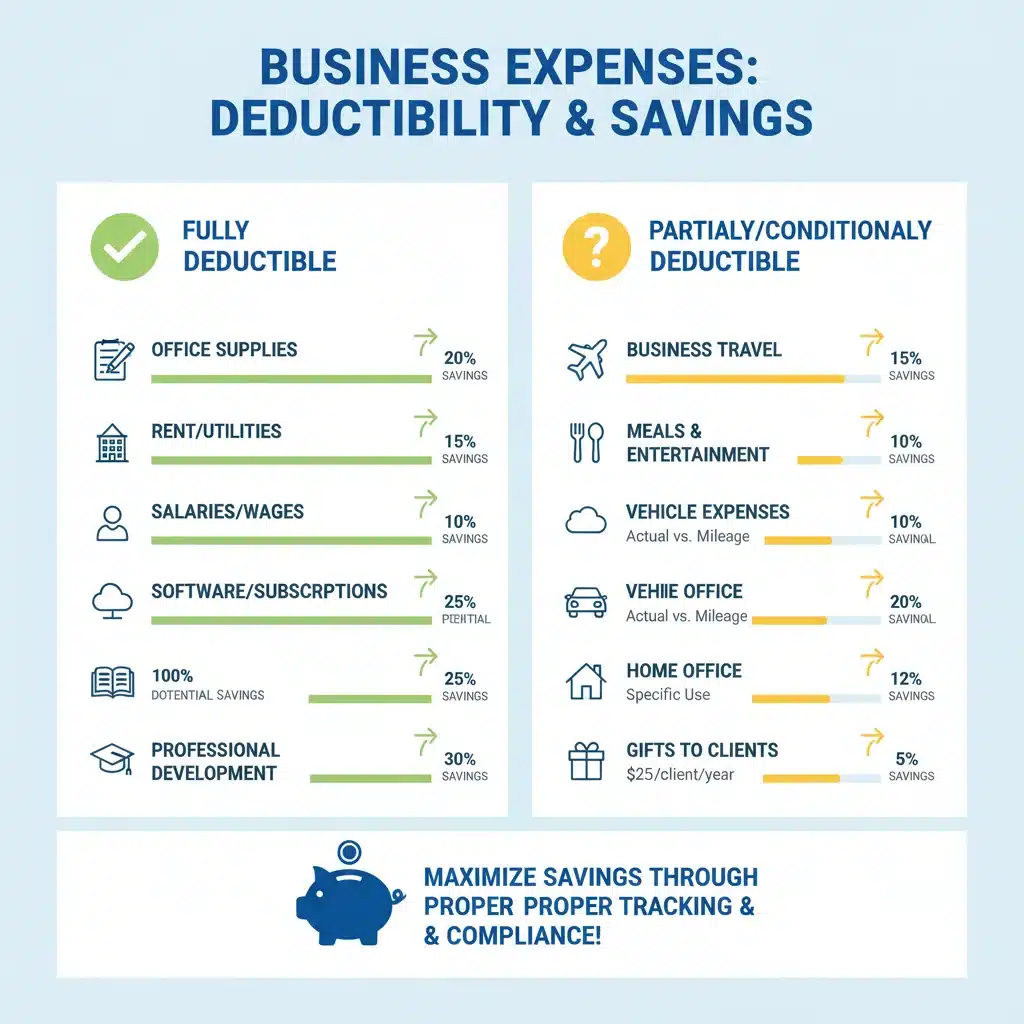
If you use a portion of your home exclusively and regularly for business, you may qualify for the home office deduction. There are two methods: the simplified option (a standard deduction per square foot, up to a maximum) and the regular method (deducting a percentage of actual expenses like mortgage interest, utilities, and insurance). The regular method often yields a larger deduction but requires more detailed record-keeping. Ensure your space meets the ‘exclusive and regular use’ criteria to avoid issues.
Business Travel, Meals, and Entertainment
Deducting business travel expenses (transportation, lodging) is straightforward, but meals and entertainment have specific rules. Business meals are generally 50% deductible if they are ordinary and necessary, not lavish, and you are present. For 2026, it’s crucial to confirm if any temporary 100% deductibility for business meals (as seen in prior years for restaurant meals) is extended. Entertainment expenses, on the other hand, are generally not deductible, with very few exceptions. Keep meticulous records for all these expenses, including the business purpose, attendees, and location.
Vehicle Expenses
If you use your personal vehicle for business, you can deduct associated costs. You have two options: the standard mileage rate (which includes depreciation, gas, oil, insurance, and maintenance) or deducting actual expenses (gas, oil, repairs, insurance, registration fees, and depreciation). A detailed mileage log is essential for both methods to prove business use. Choosing the right method depends on your vehicle’s usage and expenses, so a comparison is often beneficial.
Insurance Premiums
Most insurance premiums for your business are deductible. This includes general liability, professional liability (E&O), property insurance, and even health insurance premiums for self-employed individuals (if certain conditions are met and you’re not eligible for an employer-sponsored plan). Workers’ compensation insurance is also a common deductible expense. Don’t overlook these significant recurring costs.
Professional Development and Education
Expenses for professional development, such as seminars, workshops, and subscriptions to industry publications, are generally deductible if they maintain or improve skills needed in your business. However, expenses for education that qualifies you for a new trade or business are typically not deductible. This is an excellent way to invest in yourself and your business while reducing your taxable income.
Unearthing Overlooked Small Business Deductions
Beyond the common deductions, there are several lesser-known or often-forgotten expenses that can significantly reduce your tax burden. These are the insider strategies that can push your savings closer to that 15% mark.
Depreciation and Section 179 Expensing
When you purchase assets with a useful life of more than one year (e.g., equipment, furniture, vehicles), you can’t typically deduct the full cost in the year of purchase. Instead, you depreciate them over their useful life. However, Section 179 of the IRS tax code allows businesses to deduct the full purchase price of qualifying equipment and/or software purchased or financed during the tax year, up to certain limits. Bonus depreciation may also be available, allowing you to deduct a large percentage of the cost of new (and sometimes used) property. These provisions can offer substantial upfront savings.
Startup and Organizational Costs
If you’re a new business, you can deduct up to $5,000 in business startup costs and $5,000 in organizational costs in the year your business begins. These costs include expenses incurred before you officially open, such as market research, legal fees for forming your entity, and advertising. Any excess costs must be amortized over 180 months. Many new entrepreneurs overlook these crucial initial deductions.
Bank Fees and Interest Expenses
Don’t forget to deduct bank service charges, credit card processing fees, and interest paid on business loans or credit cards. These seemingly small amounts can add up over a year and are legitimate business expenses. Keep a close eye on your bank statements and credit card statements to capture all these costs.
Bad Debts
If your business extends credit to customers and a debt becomes uncollectible, you might be able to deduct it as a bad debt. This applies to specific debts that are truly worthless. Proper documentation of collection efforts and the uncollectibility of the debt is crucial here.
Professional Fees
The costs associated with hiring professionals like accountants, lawyers, consultants, and marketing agencies are fully deductible. These services are often essential for business operations and growth, making their costs a valuable deduction. Even fees for tax preparation can be deductible if they are related to your business taxes.
Retirement Plan Contributions
Contributing to a self-employed retirement plan (like a SEP IRA, Solo 401(k), or SIMPLE IRA) is one of the most powerful ways to reduce your taxable income. Not only do these contributions grow tax-deferred (or tax-free in the case of a Roth Solo 401(k) for some contributions), but your contributions are often deductible. This is a dual-benefit strategy: saving for your future while lowering your current tax bill.
Health Savings Accounts (HSAs)
If you have a high-deductible health plan (HDHP), you can contribute to an HSA. Contributions are tax-deductible, the money grows tax-free, and withdrawals for qualified medical expenses are tax-free. For self-employed individuals, this is an excellent way to save on healthcare costs and reduce taxable income.
Strategic Planning for Maximum Impact
Maximizing your small business deductions isn’t just about identifying expenses; it’s about strategic planning throughout the year. A proactive approach can uncover more opportunities and ensure you’re compliant.
Year-End Tax Planning
As the end of the year approaches, conduct a thorough review of your financial situation. Consider accelerating deductible expenses into the current tax year if you anticipate higher income, or deferring income into the next year. For example, purchasing new equipment before December 31st can allow you to take advantage of Section 179 expensing for the current tax year. Similarly, paying outstanding invoices for services rendered to your business before year-end can shift the deduction to the current year.
Understanding Tax Credits vs. Deductions
While deductions reduce your taxable income, tax credits directly reduce the amount of tax you owe, dollar for dollar. It’s crucial to understand the difference and identify any credits your small business might qualify for. Examples include credits for research and development, hiring specific types of employees, or investing in certain energy-efficient technologies. A credit is generally more valuable than a deduction, so always check for eligibility.
Choosing the Right Business Structure
Your business structure (sole proprietorship, partnership, S-Corp, C-Corp, LLC) significantly impacts how your income is taxed and which deductions are available. For example, S-Corporations can allow owners to pay themselves a reasonable salary and take the remaining profits as distributions, potentially reducing self-employment taxes. Regularly review your business structure with a tax professional to ensure it’s still the most tax-efficient option for your current situation and future goals.
Leveraging Technology for Efficiency
Modern accounting software (e.g., QuickBooks, Xero) and expense tracking apps (e.g., Expensify, MileIQ) can revolutionize your record-keeping. These tools automate data entry, categorize expenses, and generate reports, saving you countless hours and reducing the risk of missing deductions. Integrating these tools into your daily operations is a small investment with significant returns in terms of efficiency and accuracy.

Common Pitfalls and How to Avoid Them
Even with the best intentions, small business owners can fall into common traps that jeopardize their small business deductions. Awareness is the first step to avoidance.
Mixing Personal and Business Finances
One of the biggest mistakes is failing to keep personal and business finances separate. This makes tracking expenses incredibly difficult and can raise red flags with the IRS. Open separate bank accounts and credit cards for your business from day one. This clear separation is not just for tax purposes; it’s a fundamental best practice for business management.
Lack of Documentation
As repeatedly emphasized, documentation is king. Forgetting to keep receipts, not logging mileage, or failing to note the business purpose of an expense can lead to disallowed deductions during an audit. Implement a system for immediate and consistent record-keeping.
Claiming Non-Deductible Expenses
Not every expense is deductible. Personal expenses, capital expenditures (without proper depreciation/expensing), and certain fines or penalties are generally not deductible. Claiming these can lead to penalties and interest. When in doubt, consult a tax professional.
Ignoring State and Local Taxes
While federal income tax deductions are a major focus, don’t forget about state and local taxes. Depending on your location, there may be state-specific deductions or credits for which your business qualifies. State income taxes, property taxes on business assets, and sales taxes (if your business pays them and they are not passed on) can also be deductible.
Not Seeking Professional Advice
Tax laws are complex and constantly changing. Relying solely on DIY tax preparation can lead to missed opportunities or costly errors. A qualified tax professional (CPA or Enrolled Agent) specializing in small business taxes can provide invaluable guidance, identify all eligible small business deductions, and help you develop a robust tax strategy. The fees for their services are, of course, also deductible!
The Path to 15% Savings and Beyond
Achieving significant tax savings, potentially up to 15% or more, requires a combination of diligence, knowledge, and proactive planning. It’s not a one-time event but an ongoing process that integrates seamlessly with your overall business operations. By meticulously tracking expenses, staying informed about tax law changes, and strategically utilizing every available deduction and credit, you can dramatically reduce your tax liability.
Remember, every dollar saved in taxes is a dollar that can be reinvested into your business, used for expansion, employee benefits, or personal financial security. This isn’t about avoiding taxes; it’s about smart financial management and ensuring you only pay what you legitimately owe, nothing more. The cumulative effect of maximizing your small business deductions year after year can be transformative for your business’s financial health.
Actionable Steps for 2026 Tax Season:
- Review Your Books Regularly: Don’t wait until year-end. Monthly or quarterly reviews help catch missed deductions and ensure accuracy.
- Automate Expense Tracking: Implement software and apps to simplify and automate record-keeping.
- Educate Yourself: Stay updated on IRS guidelines and potential legislative changes for 2026.
- Consult a Tax Professional: Schedule a consultation early in the year to discuss your specific business situation and strategize.
- Separate Finances: Maintain strict separation between personal and business accounts.
- Plan for Retirement: Explore and contribute to self-employed retirement plans.
- Consider Your Business Structure: Re-evaluate if your current structure is the most tax-efficient.
By taking these steps, you’re not just preparing for tax season; you’re building a resilient, financially savvy business that is equipped to thrive. Embrace these insider strategies for maximizing your small business deductions in 2026, and watch your savings grow.