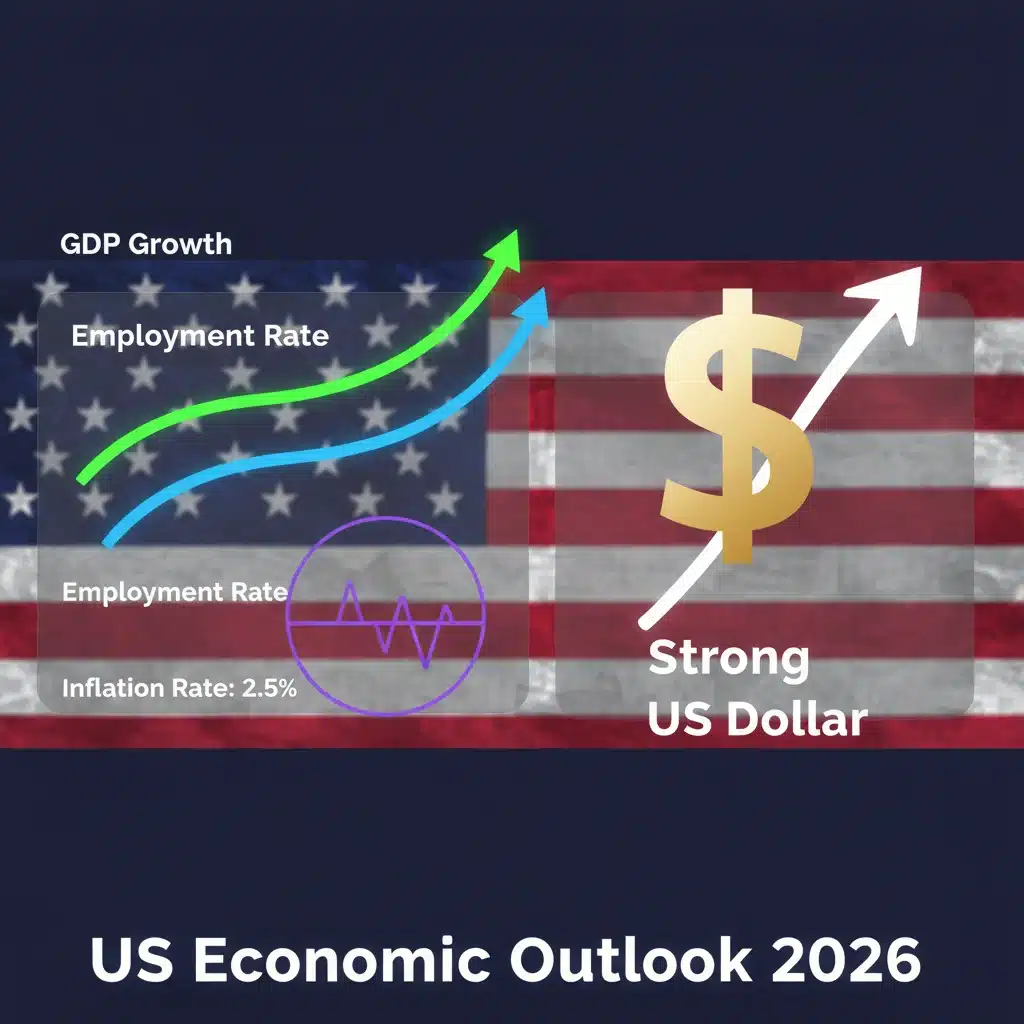
The United States economy, a global powerhouse, is constantly under scrutiny, with economists, policymakers, and investors eagerly anticipating its future trajectory. As we cast our gaze towards 2026, a complex tapestry of factors will undoubtedly shape the US economic outlook. This comprehensive analysis will delve into the critical indicators, growth projections, and potential challenges and opportunities that lie ahead for the American economy over the next 12 months. Understanding the nuances of this outlook is paramount for businesses, individuals, and international partners alike.
The current economic landscape is characterized by a delicate balance between persistent inflationary pressures, a resilient labor market, and the ongoing recalibration of monetary policy by the Federal Reserve. These elements, combined with geopolitical developments and technological advancements, will dictate the pace and nature of economic growth. Our objective is to provide a clear, data-driven perspective on what to expect, offering insights into how these various forces might interact to define the US economic outlook for 2026.
Navigating the future requires a deep understanding of the present and an informed projection of trends. This article aims to equip readers with that understanding, breaking down complex economic concepts into digestible insights. From GDP growth to consumer spending, and from interest rate policies to global trade dynamics, every piece of the puzzle contributes to the overarching narrative of the US economic outlook.
Understanding the Current Economic Climate: Foundation for 2026
Before we project forward, it’s essential to establish a baseline by examining the current state of the US economy. The post-pandemic recovery has been robust in many respects, yet it has also introduced unprecedented challenges. Supply chain disruptions, shifts in consumer demand, and significant fiscal and monetary interventions have all played a role in shaping the present.
Inflationary Pressures and Federal Reserve Policy
One of the most dominant themes in recent economic discourse has been inflation. Following a period of historically low inflation, prices surged, driven by a combination of strong demand, supply-side constraints, and geopolitical events. The Federal Reserve responded aggressively, implementing a series of interest rate hikes aimed at cooling the economy and bringing inflation back to its target of 2%. The effectiveness and timing of these policies will be crucial in shaping the US economic outlook for 2026.
As we approach 2026, the market will be closely watching for signs of sustained disinflation. A soft landing – where inflation recedes without triggering a severe recession – remains the Fed’s primary objective. The success or failure of this endeavor will have profound implications for consumer purchasing power, business investment, and overall economic stability. A continued elevated inflation rate could necessitate further restrictive policies, potentially dampening growth prospects. Conversely, a rapid decline in inflation could pave the way for interest rate cuts, stimulating economic activity.
The Resilient Labor Market
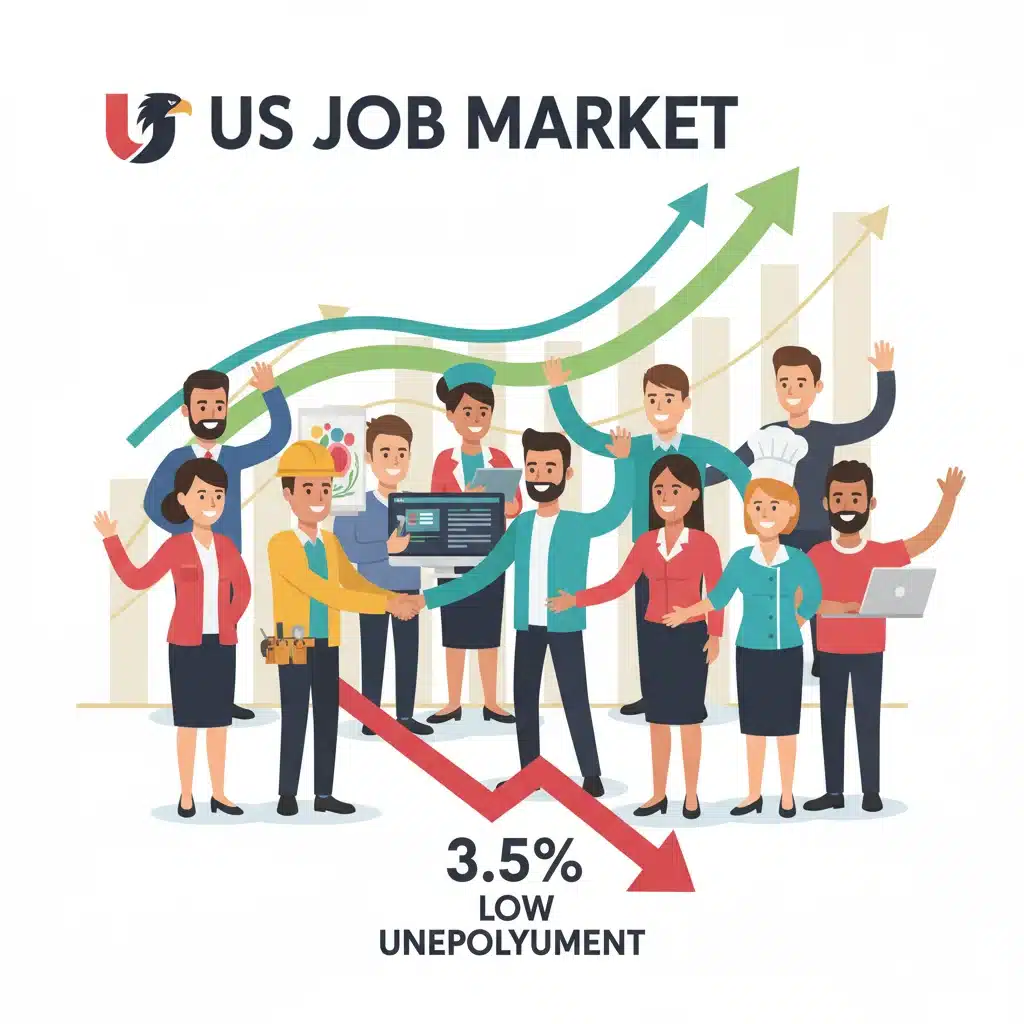
Despite inflationary pressures and rising interest rates, the US labor market has demonstrated remarkable resilience. Unemployment rates have remained near historic lows, and job growth, while moderating, has continued to be positive. This strong labor market has provided a significant buffer against economic downturns, supporting consumer spending and overall economic activity.
However, challenges persist. Wage growth, while robust, has often lagged behind inflation, eroding real wages for many workers. Furthermore, labor force participation rates, particularly among certain demographics, have not fully recovered to pre-pandemic levels. For the US economic outlook in 2026, the key will be whether the labor market can maintain its strength while balancing wage growth with inflation control. A healthy labor market is a cornerstone of a stable economy, contributing to consumer confidence and sustained demand.
Key Economic Indicators to Watch for 2026
Forecasting the US economic outlook for 2026 requires a close examination of several key indicators. These metrics provide a snapshot of economic health and offer clues about future trends.
Gross Domestic Product (GDP) Growth
GDP growth is the most fundamental measure of economic activity. For 2026, economists generally anticipate a moderation from the elevated growth rates seen immediately after the pandemic, settling into a more sustainable, albeit slower, pace. Factors influencing GDP will include consumer spending, business investment, government expenditure, and net exports.
Analysts will be looking for signs of sustained, positive growth, avoiding both overheating (which could reignite inflation) and significant contraction (indicating a recession). The composition of GDP growth will also be important – a shift from consumption-driven growth to investment-led growth would signal a healthier, more sustainable expansion. Innovation and productivity enhancements will play a vital role in boosting potential GDP growth.
Inflation Rates and Price Stability
As discussed, inflation remains a central concern. The 2026 US economic outlook will heavily depend on whether the Federal Reserve successfully guides inflation back to its target. Key metrics to monitor include the Consumer Price Index (CPI) and the Personal Consumption Expenditures (PCE) price index, the latter being the Fed’s preferred measure.
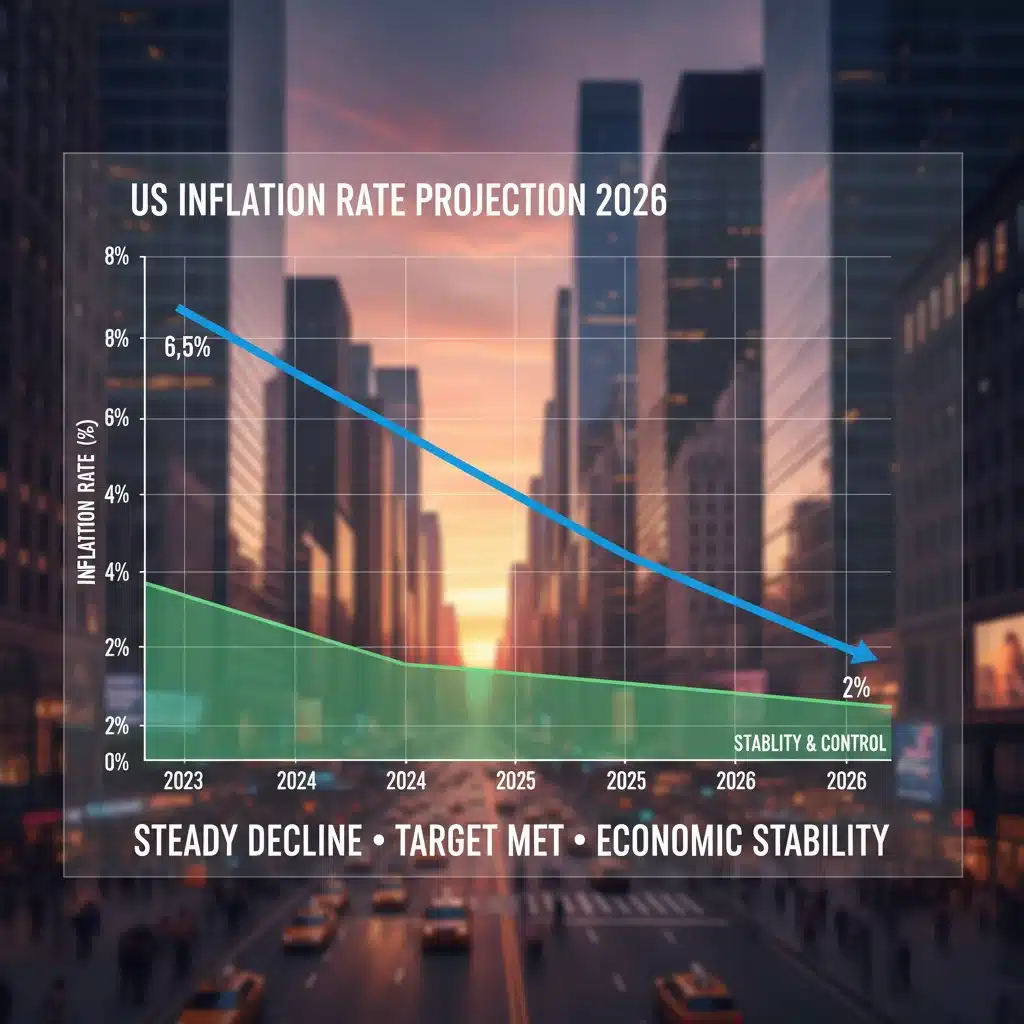
Factors that could influence inflation include global commodity prices, supply chain resilience, and wage growth. A stable and predictable inflation environment is crucial for long-term economic planning and investment. Persistent volatility in prices could lead to uncertainty, deterring investment and consumer spending, thereby negatively impacting the US economic outlook.
Employment and Unemployment Rates
The health of the labor market will continue to be a critical indicator. The unemployment rate, job creation numbers (e.g., Non-Farm Payrolls), and labor force participation rates will provide insights into the overall strength of the economy. A robust labor market supports consumer confidence and spending, which are vital components of economic growth.
For 2026, a slight increase in the unemployment rate might be considered a natural outcome of the Fed’s efforts to cool the economy, as long as it remains within a healthy range and doesn’t signal a significant downturn. The focus will be on the quality of jobs being created and whether wage growth aligns with productivity gains without fueling inflationary spirals.
Consumer Spending and Confidence
Consumer spending accounts for a significant portion of US GDP, making consumer confidence a crucial barometer for the US economic outlook. Factors such as real wage growth, employment stability, and household debt levels will influence how much consumers are willing and able to spend.
Surveys of consumer confidence, retail sales data, and personal consumption expenditures will offer insights into the strength of household demand. A resilient consumer base can help cushion the economy against external shocks, while a significant decline in confidence could signal tougher times ahead. The availability of credit and interest rates on consumer loans will also play a role in shaping spending patterns.
Interest Rates and Monetary Policy
The Federal Reserve’s stance on interest rates will be a dominant factor in the 2026 US economic outlook. The federal funds rate influences borrowing costs across the economy, impacting everything from mortgages to business loans. The market will be keenly watching for any signals regarding future rate hikes, pauses, or even cuts.
The Fed’s dual mandate of maximum employment and price stability will guide its decisions. Any significant shift in policy could have ripple effects throughout financial markets and the broader economy. Understanding the Fed’s communication and its reaction to incoming economic data will be essential for anticipating economic trends.
Growth Projections for the US Economy in 2026
Based on current trends and expert analysis, the US economic outlook for 2026 suggests a period of moderate growth, contingent on effective policy management and the resolution of ongoing global uncertainties.
GDP Growth Projections
Most economists project that US GDP growth in 2026 will likely settle into a range of 1.5% to 2.5%. This represents a return to a more normalized growth trajectory compared to the immediate post-pandemic surge. This growth will be supported by continued, albeit slower, consumer spending, a gradual increase in business investment as uncertainty subsides, and potentially a boost from infrastructure spending initiatives.
However, these projections are subject to various risks, including a potential global economic slowdown, persistent inflation requiring further aggressive monetary tightening, or unforeseen geopolitical events. The ability of the US economy to adapt to these challenges will determine whether it can maintain this projected growth path.
Sectoral Growth Drivers
Certain sectors are expected to be key drivers of growth in the 2026 US economic outlook. Technology, particularly in areas like artificial intelligence, renewable energy, and biotechnology, is likely to continue its rapid expansion, fueled by innovation and investment. The services sector, which accounts for a large portion of the US economy, is also expected to maintain steady growth, benefiting from consumer demand.
Manufacturing, especially in areas supported by reshoring efforts and government incentives for critical industries, could see a modest revival. The construction sector’s performance will largely depend on interest rates and housing demand. Understanding these sectoral dynamics provides a more granular view of where growth will originate.
Potential Challenges and Risks to the 2026 US Economic Outlook
While the baseline forecast for the US economic outlook in 2026 is generally positive, several significant challenges and risks could derail these projections.
Persistent Inflation or Deflationary Pressures
The primary risk remains inflation. If inflation proves more stubborn than anticipated, the Federal Reserve might be forced to maintain higher interest rates for longer, increasing the risk of a recession. Conversely, an unexpected and sharp contraction in demand could lead to deflationary pressures, which can also be detrimental to economic growth by discouraging spending and investment.
Geopolitical Instability
Global geopolitical tensions, including ongoing conflicts and trade disputes, pose a significant risk to the US economic outlook. Such events can disrupt supply chains, increase commodity prices (especially energy), and reduce global demand for US exports. The interconnectedness of the global economy means that instability in one region can quickly have ripple effects worldwide, impacting investor confidence and economic activity in the US.
Financial Market Volatility
Periods of high interest rates and economic uncertainty can lead to increased volatility in financial markets. Sharp downturns in stock markets or bond markets could erode household wealth, reduce consumer and business confidence, and tighten credit conditions, thereby negatively impacting economic growth. The stability of the banking sector and the broader financial system will be crucial.
Fiscal Policy and Debt Concerns
The US national debt has reached unprecedented levels. While not an immediate crisis, the long-term implications of high debt, coupled with rising interest rates, could constrain future fiscal policy options. Debates around government spending, taxation, and debt ceiling negotiations could introduce uncertainty, potentially affecting business investment and long-term growth prospects. The fiscal stance of the government will be an important determinant of the broader US economic outlook.
Technological Disruption and Automation
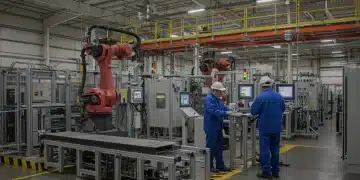
While technological advancements are often growth drivers, rapid disruption and automation also pose challenges. Job displacement in certain sectors, the need for workforce retraining, and the potential for increased inequality could create social and economic strains. Managing this transition effectively will be key to harnessing the benefits of technology while mitigating its downsides.
Opportunities and Strengths for the US Economy in 2026
Despite the challenges, the US economy possesses inherent strengths and emerging opportunities that could bolster the 2026 US economic outlook.
Innovation and Technological Leadership
The US remains a global leader in innovation and technology. Continued investment in research and development, a robust venture capital ecosystem, and a culture of entrepreneurship will drive new industries, create high-paying jobs, and enhance productivity. Areas like AI, quantum computing, biotechnology, and clean energy are poised for significant growth, offering new avenues for economic expansion.
Dynamic Labor Force and Entrepreneurship
The US benefits from a dynamic and adaptable labor force, coupled with a strong entrepreneurial spirit. The ability to attract global talent and foster new businesses provides a continuous source of economic dynamism. Policies that support education, skill development, and immigration can further enhance this strength, contributing positively to the US economic outlook.
The flexibility of the US labor market allows for quicker adjustments to economic shifts, enabling businesses to innovate and adapt. This agility is a key competitive advantage in a rapidly changing global landscape.
Resilient Consumer Market
The sheer size and wealth of the US consumer market provide a powerful engine for economic growth. Even with moderate headwinds, sustained consumer demand, supported by a healthy labor market, can provide a strong foundation for economic stability and growth. The diversity of the consumer base also allows for a wide range of products and services to thrive.
Energy Independence and Security
The US has significantly increased its domestic energy production, moving closer to energy independence. This reduces vulnerability to global energy price shocks and geopolitical disruptions, providing a degree of economic stability that many other nations lack. Lower and more stable energy costs can benefit both consumers and businesses, improving the overall US economic outlook.
Strong Institutional Framework
The US benefits from a strong and transparent institutional framework, including an independent judiciary, robust regulatory bodies, and a well-established rule of law. These institutions provide a stable environment for businesses to operate and for investors to have confidence, which is a critical, albeit often overlooked, factor in long-term economic prosperity.
Policy Implications for the 2026 US Economic Outlook
Government policies, both fiscal and monetary, will play a pivotal role in shaping the 2026 US economic outlook. The Federal Reserve’s actions on interest rates and quantitative tightening will be closely watched, as will the fiscal decisions made by Congress and the administration.
Monetary Policy: The Federal Reserve’s Role
The Federal Reserve will continue to navigate the challenging task of balancing inflation control with economic growth. Its decisions on the federal funds rate will impact borrowing costs, investment, and consumer spending. Clear communication from the Fed will be essential to manage market expectations and avoid unnecessary volatility.
Expectations are that by 2026, the Fed might have achieved its inflation target, potentially leading to a more accommodative stance, including possible interest rate cuts if economic growth warrants it. However, any resurgence of inflationary pressures would necessitate a renewed hawkish approach, which could dampen the US economic outlook.
Fiscal Policy: Government Spending and Taxation
Fiscal policy, encompassing government spending and taxation, will also be a key determinant. Infrastructure investments, green energy initiatives, and social programs can stimulate demand and boost long-term productivity. However, these benefits must be weighed against their impact on the national debt and potential inflationary pressures.
Tax policy changes, whether aimed at businesses or individuals, can influence investment decisions, consumer behavior, and income distribution. The political environment and the outcome of future elections could significantly alter the fiscal trajectory, thereby impacting the US economic outlook for 2026 and beyond.
Trade Policy and International Relations
US trade policy will continue to influence global supply chains, domestic industries, and international relations. A more protectionist stance could lead to trade disputes and higher costs for consumers, while a more open approach could foster greater economic integration and efficiency. The ongoing efforts to diversify supply chains and strengthen strategic alliances will also be important.
International relations, particularly with major economic partners and competitors, will also shape the trade landscape. Geopolitical stability and cooperative international frameworks are conducive to a positive US economic outlook, facilitating global trade and investment.
Conclusion: A Balanced Perspective on the 2026 US Economic Outlook
The US economic outlook for 2026 is poised for a period of moderate growth, characterized by a resilient labor market, stabilizing inflation, and continued technological advancement. However, this positive trajectory is not without its challenges. Persistent inflationary pressures, geopolitical instability, and financial market volatility remain significant risks that require careful monitoring and astute policy responses.
The strength of the US economy lies in its capacity for innovation, its dynamic workforce, and its robust institutional framework. These inherent advantages provide a strong foundation to navigate the complexities of the global economic landscape. The Federal Reserve’s monetary policy, coupled with thoughtful fiscal decisions, will be instrumental in guiding the economy towards sustainable growth and price stability.
For businesses, individuals, and investors, understanding these intertwined factors is crucial for making informed decisions. The next 12 months will likely see a continued rebalancing of economic forces, with the ultimate outcome depending on how effectively policymakers address emerging challenges and harness existing opportunities. The US economic outlook for 2026, while presenting its share of uncertainties, also holds the promise of steady progress and continued adaptation in the face of a dynamic global environment.
Staying informed about key economic indicators, policy shifts, and global developments will be essential for anyone looking to navigate the American economic landscape in the coming year. The journey towards 2026 will be a testament to the resilience and adaptability of the US economy.