IRS Digital Asset Reporting 2025: Avoid Penalties

The Internal Revenue Service (IRS) is introducing significant new digital asset reporting requirements effective 2025, necessitating that taxpayers and brokers understand these changes to ensure compliance and prevent penalties.
The financial landscape is constantly evolving, and with the rise of cryptocurrencies and other digital assets, the Internal Revenue Service (IRS) is stepping up its efforts to ensure tax compliance. Starting in 2025, new reporting requirements will come into effect, fundamentally changing how digital asset transactions are tracked and reported. It’s imperative that individuals and entities engaged with these assets understand these upcoming changes to avoid significant penalties. This article delves into the specifics of these regulations, helping you navigate the complexities and ensure you are prepared.
Understanding the New Digital Asset Reporting Landscape
The IRS has identified digital assets as a critical area for tax compliance, recognizing their growing prevalence and the need for clear guidelines. The new regulations, set to take effect for transactions occurring in 2025, aim to close the information gap that has historically existed between digital asset activities and traditional financial reporting. This means a more structured approach to how various digital asset transactions are reported to the tax authorities.
These changes are not merely administrative; they represent a significant shift in the IRS’s oversight of the digital economy. The goal is to ensure that all taxable events involving digital assets, from trading to staking and mining, are accurately reported, mirroring the reporting standards applied to traditional investments like stocks and bonds. This move is part of a broader global push by tax authorities to regulate the burgeoning digital asset market more effectively.
Who is affected by the new rules?
The new reporting requirementscast a wide net, impacting various stakeholders in the digital asset ecosystem. It’s not just sophisticated traders or institutional investors who need to pay attention; even casual participants in the digital asset space could be affected. Understanding your role and obligations is the first step toward compliance.
- Individual Investors: Anyone buying, selling, exchanging, or otherwise disposing of digital assets will likely have new reporting obligations.
- Digital Asset Brokers: This includes cryptocurrency exchanges, NFT marketplaces, and certain wallet providers who facilitate digital asset transactions. They will have significant new responsibilities for collecting and reporting information.
- Businesses Accepting Digital Assets: Companies that accept digital currencies as payment for goods or services may also face new reporting requirements.
- Miners and Stakers: Individuals or entities engaged in mining or staking digital assets, potentially generating new tokens, will need to understand how these activities are now reported.
Essentially, if you interact with digital assets in any capacity that could generate a taxable event, these new rules will apply to you. The IRS is aiming for comprehensive coverage to ensure a level playing field across all asset classes.
Key Changes in Digital Asset Reporting for 2025
The upcoming changes in IRS digital asset reporting for 2025 are extensive and require a thorough understanding. At their core, these regulations introduce new forms and expand the scope of what constitutes a reportable digital asset transaction. The IRS is moving towards a system where digital asset brokers will be required to provide detailed information to both taxpayers and the IRS, similar to how traditional brokerages issue Form 1099-B for stock sales.
One of the most significant changes is the definition of a “digital asset.” The IRS has broadened this definition to include not just cryptocurrencies but also certain non-fungible tokens (NFTs) and other digital representations of value. This expanded scope means that activities involving a wider array of digital holdings will now fall under the reporting umbrella.
New Form 1099-DA: A cornerstone of reporting
A central component of the new framework is the proposed Form 1099-DA. This form will be issued by digital asset brokers to report sales and exchanges of digital assets, providing taxpayers with crucial information needed to calculate capital gains or losses. It’s designed to streamline the reporting process for taxpayers and give the IRS a clearer picture of digital asset activity.
- Gross Proceeds: Brokers will report the gross proceeds from sales or exchanges of digital assets.
- Basis Information: In many cases, brokers will also be required to report the cost basis of the digital assets, which is essential for calculating gains or losses.
- Acquisition Date: The date when the digital asset was acquired will also be reported, helping to determine if gains are short-term or long-term.
The introduction of Form 1099-DA aims to simplify tax preparation for individuals while simultaneously enhancing the IRS’s ability to cross-reference reported income. This shift places a greater burden on brokers but offers more clarity for taxpayers, assuming the information provided is accurate and timely.
Penalties for Non-Compliance and How to Avoid Them
The IRS is serious about these new digital asset reporting requirements, and non-compliance can lead to significant financial penalties. Understanding the potential repercussions is a strong motivator for ensuring timely and accurate reporting. Penalties for failing to file correct information returns, such as the new Form 1099-DA, can be substantial, underscoring the importance of preparation.
For instance, failing to provide a correct payee statement to an individual can result in a penalty of up to $250 per statement. Similar penalties apply to brokers who fail to file correct information returns with the IRS. These penalties can quickly accumulate, especially for individuals or entities with numerous digital asset transactions, making proactive compliance an economic necessity.
Strategies for penalty avoidance
Avoiding penalties requires a proactive and informed approach. It’s not enough to simply be aware of the new rules; you need to implement strategies to ensure you meet all reporting obligations. This includes meticulous record-keeping, understanding your tax liabilities, and potentially seeking professional guidance.
- Maintain Detailed Records: Keep comprehensive records of all digital asset transactions, including acquisition dates, costs, sale prices, and any associated fees. This information will be crucial for accurate reporting.
- Understand Taxable Events: Educate yourself on what constitutes a taxable event in the digital asset space. This includes sales, exchanges, and even certain uses of digital assets.
- Utilize Tax Software or Professionals: Consider using specialized digital asset tax software or consulting with a tax professional experienced in cryptocurrency and blockchain to ensure compliance.
- Stay Informed: The regulatory landscape for digital assets is dynamic. Continuously monitor IRS updates and guidance to adapt your reporting practices as needed.
By taking these steps, both individuals and brokers can significantly reduce their risk of incurring penalties. The emphasis is on diligence and preparation, ensuring that all digital asset activities are accounted for in accordance with IRS guidelines.
The Role of Digital Asset Brokers in New Reporting
Digital asset brokers are at the forefront of these new reporting requirements. The IRS views them as crucial intermediaries for collecting and disseminating information about digital asset transactions. Their responsibilities will expand significantly, placing a greater emphasis on data collection, verification, and timely submission to both account holders and the IRS.
This expanded role means brokers will need to invest in robust compliance systems and processes. They will be tasked with identifying reportable transactions, accurately calculating gross proceeds and basis, and issuing the new Form 1099-DA. The accuracy of the information provided by brokers will directly impact taxpayers’ ability to file correct returns, highlighting the need for precision and reliability.
Challenges and opportunities for brokers
While the new regulations present significant compliance challenges for digital asset brokers, they also offer opportunities. Brokers who can effectively adapt and provide seamless reporting services may gain a competitive advantage by instilling greater trust and confidence among their users.
- Technological Investment: Brokers will need to enhance their technological infrastructure to handle the increased data processing and reporting demands.
- Customer Education: Providing clear guidance and support to users on how their digital asset activities are being reported will be essential.
- Data Accuracy: Ensuring the accuracy of reported data, especially cost basis information, will be paramount to avoid discrepancies and taxpayer issues.
- Regulatory Compliance Teams: Strengthening internal compliance teams to navigate the evolving regulatory environment will be crucial for sustained success.
Digital asset brokers face a pivotal moment. Their ability to meet these new IRS requirements will not only determine their compliance but also shape their relationship with their customer base and the broader regulatory ecosystem.
Impact on Tax Planning and Investment Strategies
The new IRS digital asset reporting rules for 2025 will undoubtedly influence tax planning and investment strategies for individuals and businesses involved with digital assets. With increased transparency and stricter reporting, taxpayers will need to be more strategic in how they manage their digital portfolios. This shift necessitates a deeper integration of tax considerations into every investment decision related to digital assets.
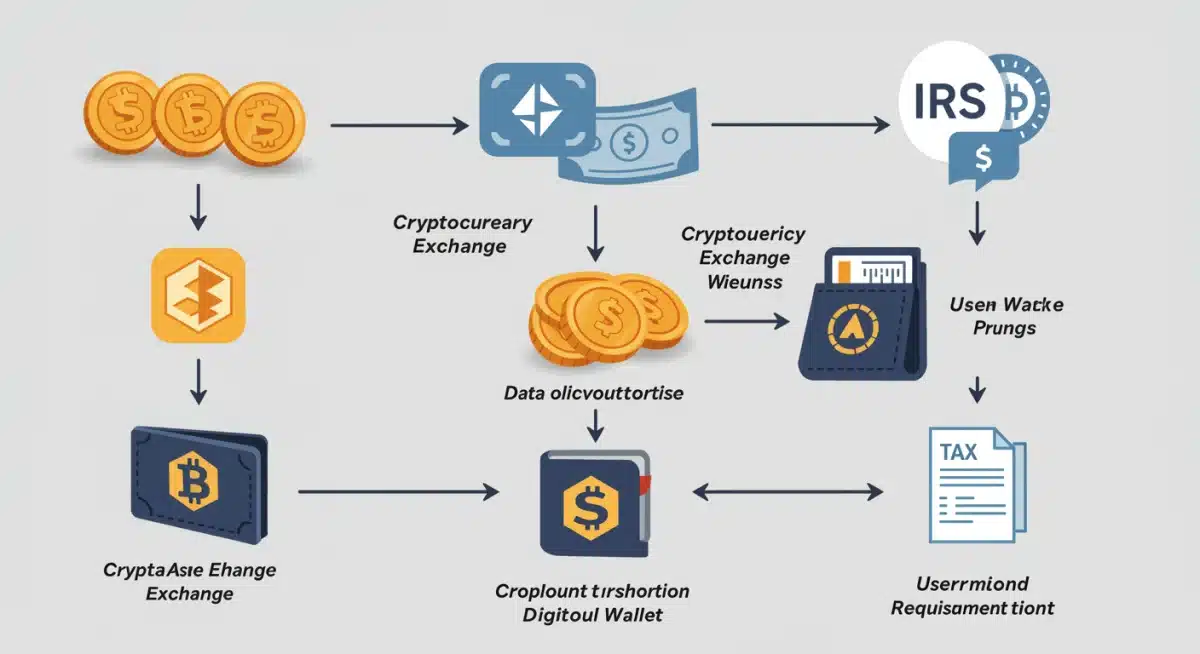
Gone are the days when digital asset transactions could fly largely under the radar. The upcoming reporting framework means that every sale, exchange, and even certain transfers will be visible to the IRS. This transparency requires investors to adopt more disciplined record-keeping and to proactively assess the tax implications of their digital asset activities before executing them.
Adapting investment approaches
For investors, adapting to the new reporting landscape means re-evaluating traditional digital asset strategies. For example, tax-loss harvesting, which involves selling assets at a loss to offset gains, becomes even more relevant and actionable with clearer reporting guidelines. Similarly, understanding the tax implications of different types of digital asset transactions, such as staking rewards versus capital gains from sales, is crucial.
- Tax-Loss Harvesting: Strategically realize losses to offset gains, now with more structured reporting.
- Understanding Long-Term vs. Short-Term Gains: Plan holding periods to potentially benefit from lower long-term capital gains tax rates.
- Diversification with Tax in Mind: Consider the tax efficiency of various digital assets and investment vehicles.
- Estate Planning: Incorporate digital assets into overall estate planning, considering their valuation and transfer implications under the new rules.
Ultimately, the new reporting requirements compel a more sophisticated approach to digital asset management, where tax efficiency and compliance are as important as investment performance. Integrating these considerations into your overall financial strategy will be key to navigating the evolving landscape successfully.
Resources and Tools for Digital Asset Tax Compliance
Navigating the new IRS digital asset reporting requirements for 2025 can seem daunting, but a wealth of resources and tools are available to help taxpayers and brokers achieve compliance. Leveraging these aids can significantly simplify the process, reduce the risk of errors, and ensure that all necessary information is accurately submitted to the IRS.
From specialized tax software to professional advisory services, the ecosystem supporting digital asset tax compliance is growing. Choosing the right tools depends on the complexity of your digital asset activities, your comfort level with tax preparation, and your budget. The key is to find solutions that offer accuracy, efficiency, and a clear audit trail.
Essential compliance tools
A range of tools has emerged to address the unique challenges of digital asset taxation. These tools often integrate with various exchanges and wallets, automating the aggregation of transaction data and the calculation of capital gains and losses.
- Specialized Crypto Tax Software: Platforms like CoinTracker, Koinly, and TaxBit can connect to your exchanges and wallets to generate comprehensive tax reports, including Form 8949 data.
- Tax Professionals and CPAs: Engaging with a tax professional who specializes in digital assets can provide personalized advice and ensure complex situations are handled correctly.
- IRS Guidance and FAQs: Regularly consult the official IRS website for the latest publications, FAQs, and guidance on digital asset reporting.
- Blockchain Explorers: These tools can help verify transactions on various blockchains, offering an additional layer of record-keeping.
By utilizing these resources, taxpayers can transform what might otherwise be a complex and error-prone process into a more manageable task. The goal is to ensure that all digital asset transactions are accurately tracked and reported, minimizing the risk of penalties and maximizing tax efficiency.
Preparing for the 2025 Digital Asset Tax Season
The impending 2025 tax season, with its new digital asset reporting requirements, demands proactive preparation. Waiting until the last minute can lead to rushed efforts, potential errors, and increased stress. Starting early allows ample time to gather necessary documentation, understand the new forms, and consult with experts if needed. This foresight is critical for seamless compliance.
Preparation involves more than just understanding the rules; it’s about integrating these new requirements into your ongoing financial management. This means reviewing your current digital asset holdings and activities, identifying potential reporting gaps, and establishing a robust system for future transactions. The earlier you begin, the smoother your transition to the new reporting regime will be.
Checklist for readiness
To ensure you are fully prepared for the 2025 tax season, consider the following checklist. These steps will help you systematically address the various aspects of the new digital asset reporting rules.
- Review All Digital Asset Accounts: Consolidate information from all exchanges, wallets, and platforms where you hold or transact digital assets.
- Verify Transaction History: Ensure you have a complete and accurate history of all buys, sells, exchanges, and other taxable events.
- Understand Broker Reporting: Familiarize yourself with the specific reporting capabilities and timelines of the digital asset brokers you use.
- Update Financial Software: Make sure any personal finance or tax preparation software you use is updated to handle the new digital asset forms and calculations.
- Seek Professional Advice: If your digital asset activities are complex, schedule a consultation with a tax professional specializing in this area well in advance of tax season.
By diligently following these preparatory steps, you can confidently approach the 2025 tax season. The goal is to move from uncertainty to clarity, ensuring that your digital asset tax obligations are met accurately and efficiently, thereby avoiding any unnecessary penalties.
| Key Aspect | Brief Description |
|---|---|
| Effective Date | New reporting requirements for digital assets commence for transactions in 2025. |
| New Form 1099-DA | Digital asset brokers will issue this form for sales and exchanges, similar to Form 1099-B. |
| Potential Penalties | Failure to comply can result in penalties up to $250 per incorrect or unfiled statement. |
| Impact on Brokers | Expanded responsibilities for data collection, verification, and reporting of digital asset transactions. |
Frequently Asked Questions About Digital Asset Reporting
The IRS broadly defines digital assets to include any digital representation of value recorded on a cryptographically secured distributed ledger or similar technology. This encompasses cryptocurrencies, stablecoins, and certain non-fungible tokens (NFTs), aiming for comprehensive coverage of the digital economy.
You should receive a Form 1099-DA from digital asset brokers (e.g., exchanges) for sales and exchanges of digital assets that occur in 2025 and beyond. However, not all transactions, especially those on decentralized platforms or peer-to-peer, may be covered, requiring you to maintain personal records.
Failure to report digital asset transactions accurately can lead to significant penalties, including fines of up to $250 per incorrect or unfiled information statement. Additionally, you could face interest charges on underpaid taxes and even more severe penalties for intentional disregard.
Tracking your cost basis is crucial for calculating capital gains or losses. It’s recommended to use specialized crypto tax software that integrates with your exchanges and wallets to automate this process. Keep detailed records of all purchases, including dates, amounts, and associated fees.
Yes, certain non-fungible tokens (NFTs) are considered digital assets under the new IRS guidelines. If you sell, exchange, or otherwise dispose of an NFT, the transaction may be subject to reporting requirements, particularly if facilitated by a digital asset broker or marketplace.
Conclusion
The introduction of new IRS digital asset reporting requirements in 2025 marks a pivotal moment for the taxation of cryptocurrencies and other digital holdings. These changes underscore the IRS’s commitment to ensuring comprehensive compliance within the rapidly expanding digital economy. For individuals and brokers alike, understanding and proactively preparing for these regulations is not merely advisable but essential. By meticulously tracking transactions, leveraging available tools, and seeking expert advice when necessary, taxpayers can confidently navigate the complexities of this new landscape, avoid potential penalties, and ensure their digital asset activities are fully compliant with federal tax law.