The Ultimate 2026 Tax Planning Checklist: Don’t Miss These Critical Deadlines
As the calendar pages turn, proactive financial management becomes increasingly crucial, especially when it comes to navigating the intricate world of taxation. The year 2026 might seem distant, but effective 2026 tax planning begins today. Understanding upcoming deadlines, potential legislative changes, and implementing smart strategies can significantly impact your financial well-being, helping you avoid penalties and maximize your savings. This comprehensive guide will walk you through everything you need to know to prepare for 2026, offering practical solutions and highlighting critical deadlines you absolutely cannot afford to miss.
Tax laws are constantly evolving, and staying ahead of the curve is paramount. Whether you’re an individual taxpayer, a small business owner, or managing complex investments, a well-thought-out 2026 tax planning strategy is your best defense against unexpected tax burdens and your strongest tool for financial growth. Let’s dive into the specifics, ensuring you’re fully equipped for a successful tax year.
Why Early 2026 Tax Planning is Non-Negotiable
Many people view tax season as a frantic dash to gather documents in March and April. However, this reactive approach often leads to missed opportunities, unnecessary stress, and even costly mistakes. Early 2026 tax planning transforms this reactive process into a proactive strategy, allowing you to:
- Identify Potential Savings: By reviewing your financial situation throughout the year, you can spot opportunities for deductions, credits, and tax-advantaged investments that might otherwise go unnoticed.
- Avoid Penalties: Late filings, underpayment of estimated taxes, and incorrect information can all lead to penalties. Proactive planning ensures you meet all deadlines and fulfill your obligations accurately.
- Optimize Financial Goals: Tax planning isn’t just about paying less; it’s about aligning your tax strategy with your broader financial objectives, whether that’s retirement planning, saving for a major purchase, or growing your wealth.
- Adapt to Legislative Changes: Tax laws are dynamic. Early planning gives you time to understand and adapt to any new legislation that might come into effect for the 2026 tax year, such as changes to tax brackets, standard deductions, or the child tax credit, among others.
- Reduce Stress: The peace of mind that comes from knowing your tax affairs are in order is invaluable. No more last-minute scrambling or sleepless nights worrying about your tax bill.
The benefits clearly outweigh the effort. Consider 2026 tax planning as an ongoing conversation with your finances, rather than a once-a-year chore.
Key 2026 Tax Planning Deadlines You Must Know
While the exact dates for 2026 tax deadlines will be officially released by the IRS later, tax deadlines generally follow a predictable pattern. Here are the critical periods and estimated dates you should mark on your calendar for effective 2026 tax planning, assuming no major shifts in the tax calendar:
1. January 31, 2026: Employer & Payer Deadlines
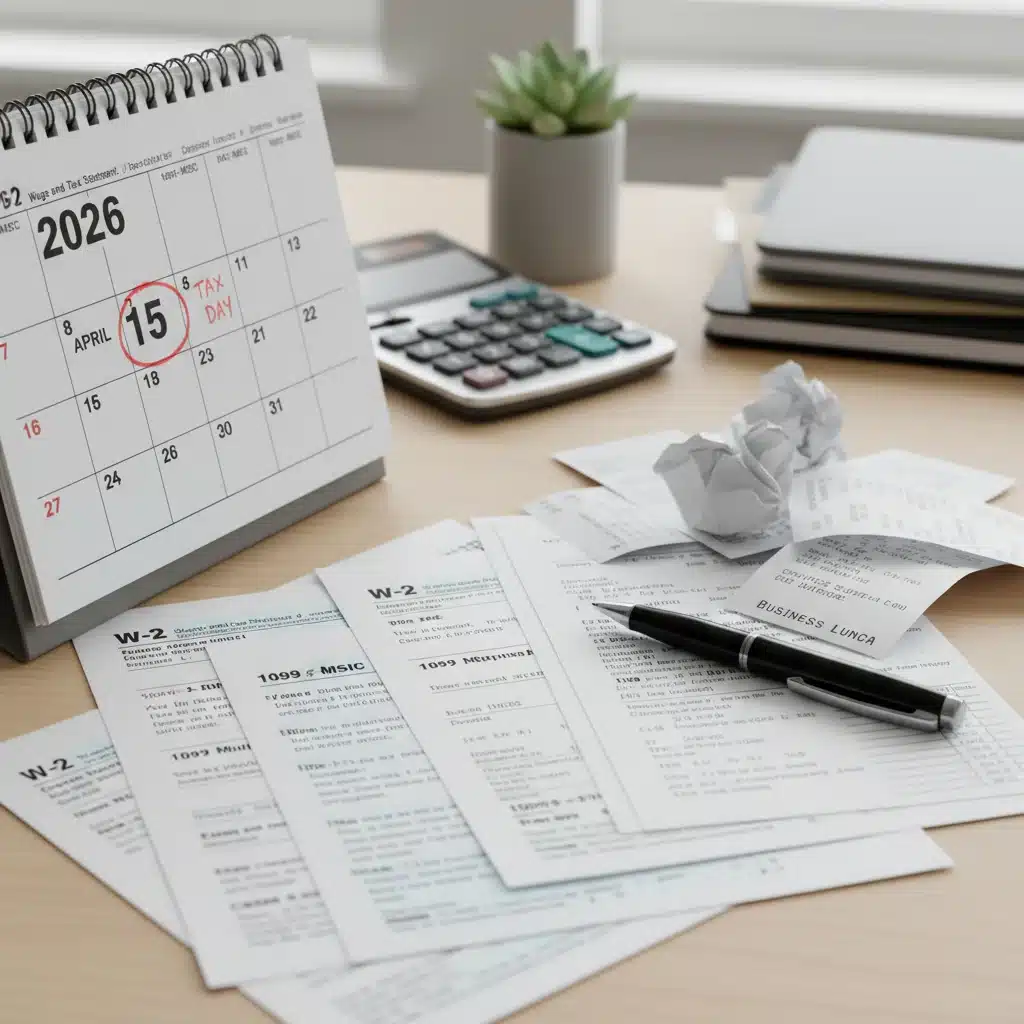
This is a crucial deadline for employers and businesses. By this date, employers must send out W-2 forms to their employees, and businesses must send out 1099 forms (1099-NEC for non-employee compensation, 1099-MISC for miscellaneous income, 1099-INT for interest, 1099-DIV for dividends, etc.) to recipients. As an individual taxpayer, this means you should expect to receive all your income-related tax documents by this date. If you haven’t received them, it’s time to follow up with your employer or financial institutions.
Practical Solutions:
- For Individuals: Create a dedicated folder (physical or digital) where you immediately place all tax-related documents as they arrive. This prevents last-minute searches.
- For Businesses: Ensure your accounting software is up-to-date and that all necessary information for W-2s and 1099s is accurate and complete well in advance of this deadline. Consider using electronic delivery options where permissible.
2. April 15, 2026: Individual & C-Corp Tax Returns Due
This is arguably the most well-known tax deadline. For most individual taxpayers (Form 1040) and C-corporations (Form 1120), your tax returns for the 2025 tax year (yes, filed in 2026) are due on this date. This includes paying any taxes owed. If April 15th falls on a weekend or holiday, the deadline typically shifts to the next business day.
Practical Solutions:
- File Early: Don’t wait until the last minute. Filing early reduces stress and gives you time to correct any errors.
- Consider an Extension: If you need more time to prepare your return, file Form 4868 for an automatic six-month extension. Remember, an extension to file is NOT an extension to pay. You must still pay any estimated taxes owed by April 15th to avoid penalties.
- Estimate and Pay: If you are self-employed or have other income not subject to withholding, make sure your estimated tax payments are up to date. The first quarterly estimated tax payment for 2026 is also due around this time.
3. June 15, 2026: Second Estimated Tax Payment Due
For individuals who pay estimated taxes (e.g., self-employed individuals, those with significant investment income), the second quarterly estimated tax payment for the 2026 tax year is due. Missing these payments or underpaying can result in penalties, even if you receive a refund when you file your annual return.
Practical Solutions:
- Set Reminders: Use calendar alerts or financial software to remind you of quarterly payment deadlines.
- Adjust Estimates: If your income or deductions change significantly during the year, adjust your estimated payments accordingly to avoid underpayment penalties.
4. September 15, 2026: Third Estimated Tax Payment & S-Corp/Partnership Extended Returns Due
The third quarterly estimated tax payment for the 2026 tax year is due. Additionally, if S-corporations (Form 1120-S) and partnerships (Form 1065) filed an extension for their 2025 tax returns, this is their extended filing deadline. While these entities don’t pay income tax themselves, their returns are crucial for reporting income and distributions to their shareholders/partners.
Practical Solutions:
- Review Business Income: Businesses should regularly review their income and expenses to ensure estimated tax payments are accurate.
- Communicate with Partners/Shareholders: S-corp and partnership owners should ensure K-1s are issued promptly after the extended filing to allow individuals to complete their personal returns.
5. October 15, 2026: Extended Individual & C-Corp Returns Due
If you filed an extension for your 2025 individual income tax return (Form 1040) or C-corporation return (Form 1120), this is your final deadline to file. There are generally no further extensions available beyond this date, and failing to file by October 15th (after an extension) can lead to significant penalties.
Practical Solutions:
- Prioritize Extended Returns: Treat this deadline with the utmost importance. Use the extension period wisely to gather all necessary documentation and meticulously prepare your return.
- Seek Professional Help: If you’re struggling to meet this deadline, engage a tax professional well in advance.
6. December 31, 2026: Year-End Tax Planning Moves
While not a filing deadline, December 31st is a critical date for making year-end tax planning moves that can impact your 2026 tax liability. This includes actions like:
- Making charitable contributions.
- Maxing out retirement contributions (401(k), IRA, HSA).
- Harvesting capital losses to offset gains.
- Prepaying certain deductible expenses.
- Making Roth IRA conversions.
Practical Solutions:
- Conduct a Year-End Review: Schedule a meeting with your financial advisor or tax preparer in late November or early December to discuss potential year-end strategies.
- Review Investment Portfolio: Assess your investment gains and losses to strategically sell assets for tax optimization.

Anticipated Tax Changes & What They Mean for Your 2026 Tax Planning
As we look towards 2026, it’s important to consider potential legislative changes that could impact your 2026 tax planning. While it’s impossible to predict with certainty, several key areas are often subject to debate and potential reform:
- Expiration of Tax Cuts and Jobs Act (TCJA) Provisions: Many individual tax provisions from the 2017 TCJA are set to expire at the end of 2025. This could mean changes to tax rates, standard deductions, itemized deduction limitations, and the child tax credit, among others. These expirations would significantly affect your 2026 tax liability if not extended or replaced.
- Inflation Adjustments: The IRS typically adjusts tax brackets, standard deductions, and various credit amounts for inflation annually. While not a legislative change, these adjustments are crucial for accurate tax planning.
- Potential New Legislation: Depending on the political climate, new tax legislation could be introduced, focusing on areas like corporate tax rates, wealth taxes, or incentives for specific industries (e.g., green energy).
Practical Solutions for Navigating Changes:
- Stay Informed: Regularly check reputable tax news sources and consult with a tax professional.
- Scenario Planning: Work with your advisor to model different tax scenarios based on potential legislative outcomes. This helps you prepare for various possibilities.
- Maintain Flexibility: Avoid making irreversible financial decisions based solely on current tax law, as it could change.
Practical Strategies for Effective 2026 Tax Planning
Beyond knowing the deadlines and potential changes, implementing sound strategies is key to successful 2026 tax planning. Here are some actionable steps you can take:
1. Maximize Retirement Contributions
Contributing to tax-advantaged retirement accounts like 401(k)s, IRAs, and HSAs is one of the most effective ways to reduce your taxable income. For 2026, anticipate contribution limits to be adjusted for inflation. Maxing out these contributions not only lowers your current tax bill but also helps you build a secure financial future.
- 401(k) and 403(b): Contribute at least enough to get any employer match. Consider contributing the maximum allowed.
- Traditional IRA: Contributions may be tax-deductible, and earnings grow tax-deferred.
- Roth IRA: While contributions aren’t deductible, qualified distributions in retirement are tax-free. Consider a Roth conversion if it aligns with your long-term tax strategy.
- Health Savings Account (HSA): A triple-tax-advantaged account (tax-deductible contributions, tax-free growth, tax-free withdrawals for qualified medical expenses).
2. Optimize Deductions and Credits
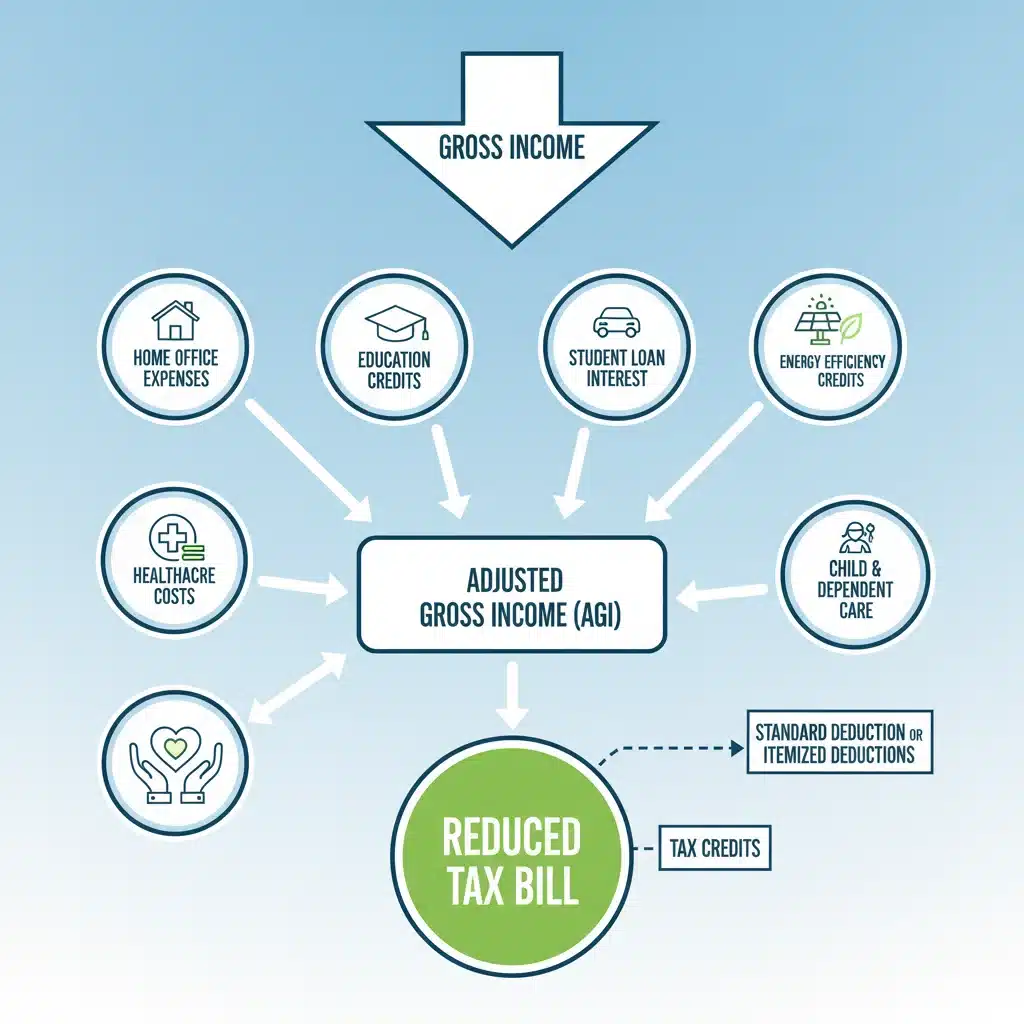
Understanding and utilizing all eligible deductions and credits can significantly lower your taxable income and tax liability. Keep meticulous records throughout the year.
- Itemized vs. Standard Deduction: With the higher standard deductions under TCJA, fewer people itemize. However, if you have significant mortgage interest, state and local taxes (SALT cap applies), medical expenses, or charitable contributions, itemizing might still be beneficial. Keep records of all potential itemized deductions.
- Business Deductions: If you’re self-employed, track all business expenses meticulously. This includes home office deductions, business travel, professional development, and supplies.
- Education Credits: Explore credits like the American Opportunity Tax Credit or Lifetime Learning Credit if you or your dependents are pursuing higher education.
- Child Tax Credit: Stay informed about potential changes to the Child Tax Credit, especially if TCJA provisions expire.
- Energy Credits: Look for credits related to energy-efficient home improvements or electric vehicle purchases.
3. Strategic Investment Planning
Your investment strategy and tax planning are inextricably linked. Tax-efficient investing can significantly boost your after-tax returns.
- Tax-Loss Harvesting: Sell investments at a loss to offset capital gains and potentially up to $3,000 of ordinary income. This is a powerful year-end strategy.
- Asset Location: Place tax-inefficient assets (e.g., high-dividend stocks, actively managed funds) in tax-advantaged accounts (401(k), IRA) and tax-efficient assets (e.g., growth stocks, municipal bonds) in taxable accounts.
- Qualified Dividends and Long-Term Capital Gains: These are often taxed at lower rates than ordinary income. Structure your portfolio to take advantage of this.
4. Consider Gifting Strategies
Gifting can be a powerful tool for estate planning and reducing your taxable estate. The annual gift tax exclusion allows you to give a certain amount to any number of individuals each year without incurring gift tax or using up your lifetime exclusion.
- Annual Gift Tax Exclusion: Stay updated on the annual exclusion amount for 2026. This allows you to transfer wealth tax-free.
- 529 Plans: Contribute to 529 college savings plans, which offer tax-free growth and withdrawals for qualified education expenses. Some states also offer a state income tax deduction for contributions.
5. Maintain Meticulous Records
This cannot be stressed enough. Good record-keeping is the backbone of effective 2026 tax planning. Keep all receipts, statements, and documents related to income, expenses, deductions, and credits. Digital copies are often preferred for easy access and backup.
- Organize Digitally: Use cloud storage or dedicated accounting software to keep records categorized and easily searchable.
- Regular Review: Periodically review your financial statements and records to catch discrepancies or missed opportunities.
The Role of a Tax Professional in Your 2026 Tax Planning
While this guide provides a solid foundation for your 2026 tax planning, the complexities of tax law often warrant the expertise of a qualified tax professional. A Certified Public Accountant (CPA) or an Enrolled Agent (EA) can offer personalized advice tailored to your unique financial situation.
- Personalized Guidance: A professional can assess your specific income sources, deductions, investments, and life events to create a highly optimized tax strategy.
- Navigating Complexities: They can help you understand intricate tax laws, especially if you have complex investments, own a business, or have international income.
- Staying Compliant: Professionals ensure your filings are accurate and compliant with all federal and state regulations, minimizing the risk of audits or penalties.
- Identifying Missed Opportunities: An expert often identifies deductions or credits you might overlook, leading to significant savings.
- Audit Support: In the unfortunate event of an audit, a tax professional can represent you and guide you through the process.
Don’t view the cost of a tax professional as an expense, but rather as an investment that can yield substantial returns in tax savings and peace of mind.
Common Mistakes to Avoid in 2026 Tax Planning
Even with the best intentions, certain pitfalls can derail your 2026 tax planning efforts. Being aware of these common mistakes can help you steer clear of them:
- Procrastination: Waiting until the last minute to gather documents or plan is the biggest mistake. It leads to rushed decisions, errors, and missed opportunities.
- Ignoring Estimated Taxes: If you have income not subject to withholding, failing to pay estimated taxes quarterly can lead to underpayment penalties.
- Poor Record-Keeping: Inadequate records make it impossible to prove deductions or income, potentially leading to disallowances or audits.
- Not Adjusting for Life Changes: Major life events (marriage, divorce, birth of a child, new job, retirement, buying a home) have significant tax implications. Failing to adjust your planning can be costly.
- Overlooking State and Local Taxes: Federal taxes are only part of the picture. State and local tax laws can be complex and vary greatly, requiring separate attention.
- Failing to Review Prior Year Returns: Your previous tax return is a roadmap. Reviewing it can highlight recurring deductions, credits, and potential areas for improvement.
- Not Consulting a Professional When Needed: For complex financial situations, trying to navigate tax law alone can be a costly mistake.
Conclusion: Your Roadmap to Successful 2026 Tax Planning
Successful 2026 tax planning is an ongoing process that requires attention, organization, and a forward-thinking mindset. By understanding the critical deadlines, anticipating potential legislative changes, and implementing smart financial strategies, you can take control of your tax situation and optimize your financial future.
Start now. Don’t wait for tax season to arrive. Begin gathering your documents, reviewing your financial situation, and making informed decisions throughout the year. Whether you manage your taxes yourself or work with a trusted tax professional, the principles outlined in this guide will serve as your essential roadmap. With diligent planning, 2026 can be a year of maximized savings, minimized stress, and robust financial health.
Remember, the goal isn’t just to pay your taxes; it’s to pay the *right* amount of tax, leveraging every legal advantage available to you. Equip yourself with this knowledge, stay organized, and approach your 2026 tax planning with confidence.