Manufacturing Reshoring 2026: Driving Domestic Production Growth
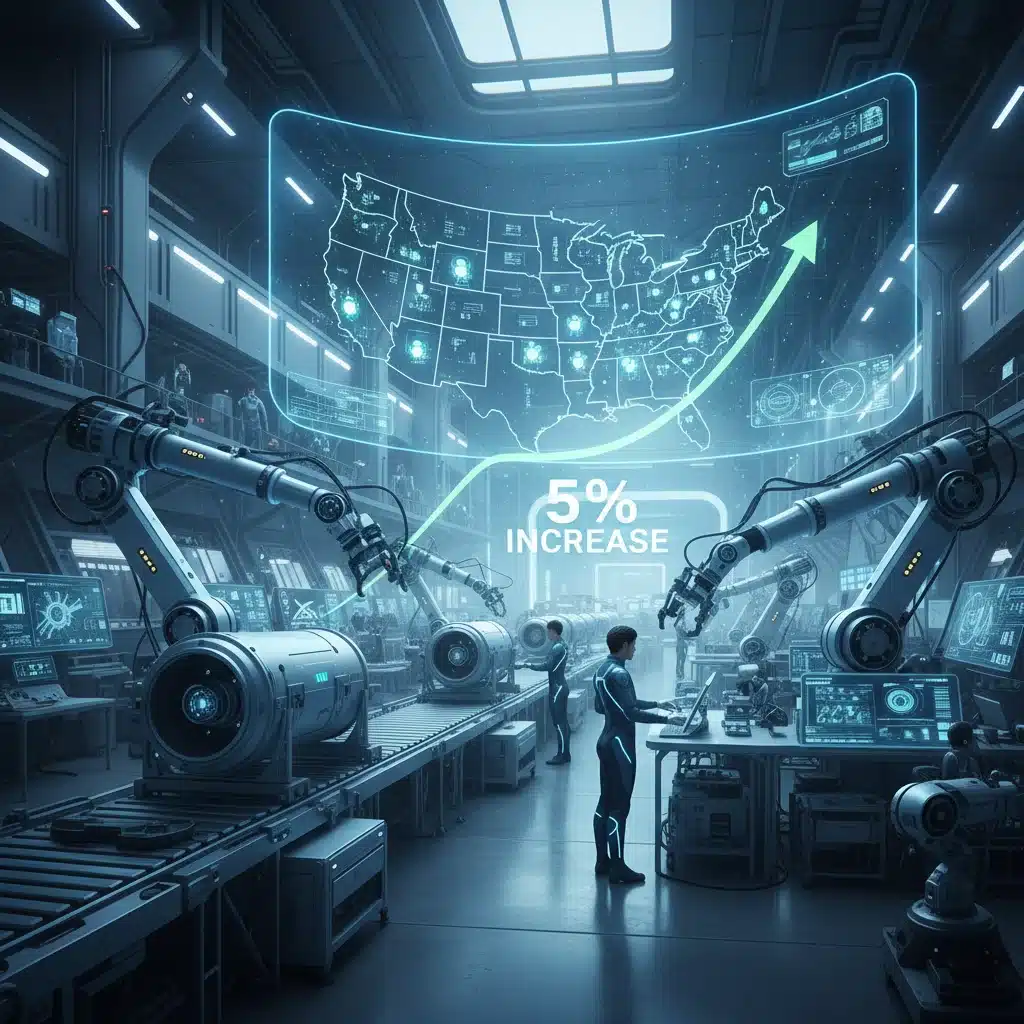
The global economic landscape is in constant flux, and few sectors feel these shifts as profoundly as manufacturing. For decades, the allure of lower labor costs drove an exodus of production facilities to offshore locations. However, a confluence of factors, including geopolitical tensions, supply chain disruptions, and a renewed focus on national economic security, is now fueling a powerful counter-trend: reshoring. By 2026, experts predict that this movement will not only be firmly entrenched but will also contribute to a significant 5% increase in domestic production. This article delves into the intricate details of this transformative period, exploring the drivers, implications, and opportunities that define the future of the manufacturing sector.
Understanding the impetus behind Manufacturing Reshoring 2026 requires a look at the lessons learned from recent global events. The COVID-19 pandemic, in particular, exposed the vulnerabilities of extended, complex global supply chains. Factories shuttered, shipping ground to a halt, and critical goods became scarce, highlighting the inherent risks of relying heavily on distant production hubs. This stark reality forced businesses and governments alike to reconsider the long-term viability of their offshore strategies.
Beyond immediate crises, a more strategic reassessment is underway. The true cost of offshoring, when factoring in shipping, inventory, intellectual property risks, and the potential for quality control issues, often outweighs the perceived labor cost savings. Furthermore, increasing automation and advanced manufacturing technologies are leveling the playing field, making domestic production more competitive than ever before. This comprehensive analysis will explore how these elements converge to shape a new era of manufacturing, one where proximity, resilience, and technological innovation take center stage.
The Economic Imperative: Why Reshoring is Gaining Traction
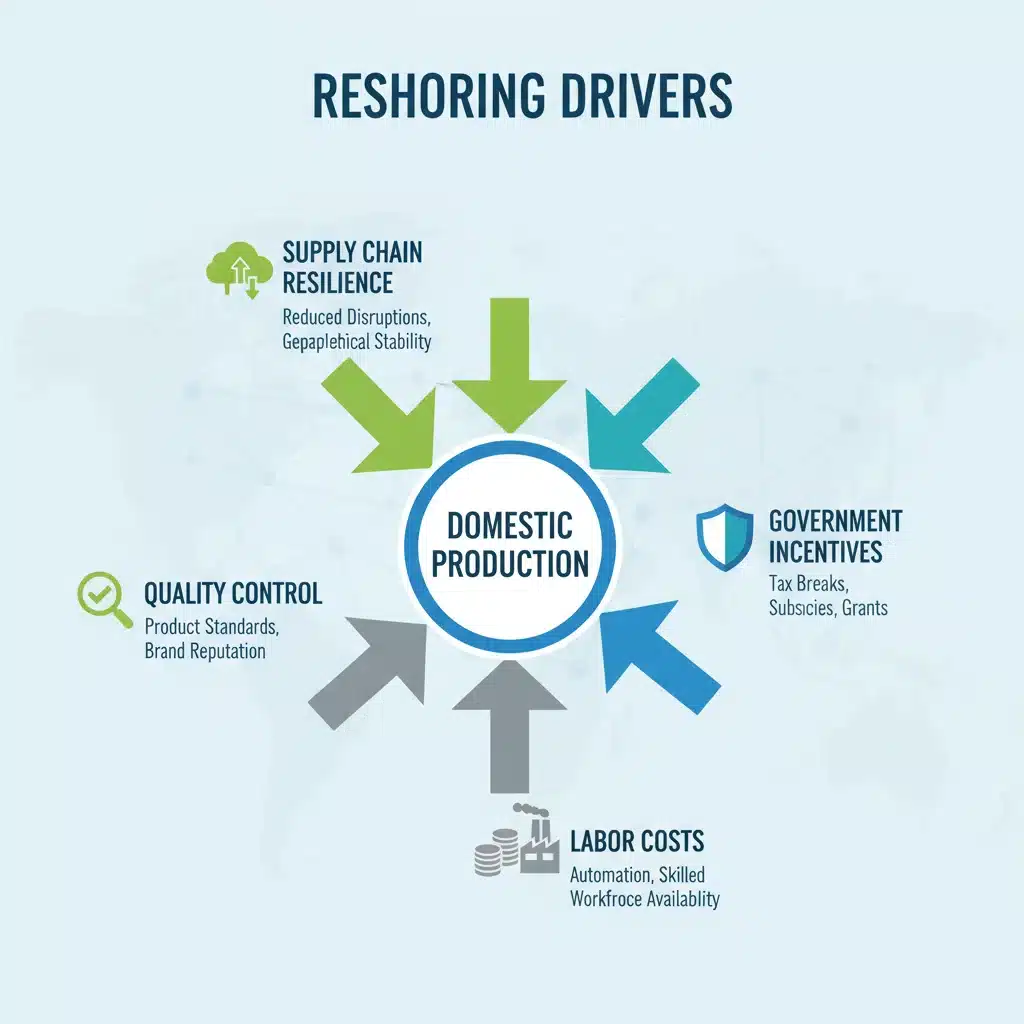
The economic arguments for Manufacturing Reshoring 2026 are multifaceted and compelling. Initially, the primary driver for offshoring was the pursuit of lower labor costs in developing nations. However, as these economies have matured, labor costs have risen, diminishing the cost advantage. Simultaneously, advancements in automation, robotics, and artificial intelligence have significantly reduced the reliance on manual labor in many manufacturing processes. This technological evolution means that a factory in a high-wage country can now achieve similar or even lower per-unit costs compared to an offshore facility, especially when considering the total cost of ownership.
Moreover, the concept of “total cost of ownership” (TCO) has gained prominence. TCO goes beyond direct manufacturing costs to include a wide array of expenses such as transportation, duties, inventory holding costs, quality control, communication overhead, and the risk of supply chain disruptions. When companies conduct a thorough TCO analysis, they often find that the perceived savings from offshoring are significantly eroded, making domestic production a more economically sound choice in many cases.
Government policies and incentives also play a crucial role. Many nations, recognizing the strategic importance of a robust domestic manufacturing base, are implementing policies designed to encourage reshoring. These can include tax breaks, subsidies for capital investment, workforce development programs, and favorable regulatory environments. These incentives not only reduce the financial burden of establishing or expanding domestic operations but also signal a long-term commitment to fostering local industry.
The consumer landscape is also evolving. There is a growing demand for locally sourced products, driven by environmental concerns, a desire to support local economies, and an emphasis on ethical production practices. Brands that can proudly display “Made in [Country]” labels often gain a competitive edge, appealing to a segment of consumers willing to pay a premium for domestic goods. This shift in consumer preferences provides an additional market-driven incentive for companies to consider reshoring their production.
Finally, the intellectual property (IP) protection aspect cannot be overstated. Companies often face risks of IP theft and unauthorized replication when manufacturing in certain offshore locations. Bringing production closer to home allows for greater control over proprietary technologies and designs, safeguarding valuable intellectual assets. This protection is particularly critical for industries relying on cutting-edge innovation and advanced manufacturing techniques.
Supply Chain Resilience: A Core Driver for Domestic Production
The fragility of global supply chains became glaringly apparent during recent crises, making supply chain resilience a paramount concern for businesses worldwide. This newfound emphasis is a major catalyst for the predicted 5% increase in domestic production by 2026. Companies are actively seeking ways to mitigate risks associated with geopolitical instability, natural disasters, and unforeseen disruptions that can halt production and cripple revenue streams.
One of the key advantages of domestic production is reduced lead times. Shorter distances between manufacturing facilities and end markets mean faster delivery, lower transportation costs, and a more agile response to changes in demand. This agility is invaluable in today’s fast-paced market, allowing companies to quickly adapt to consumer trends and minimize inventory holding costs. The ability to pivot rapidly can be a significant competitive differentiator.
Furthermore, domestic supply chains offer enhanced visibility and control. When production is closer to home, companies have better oversight of their manufacturing processes, quality control, and labor practices. This increased transparency helps in identifying and addressing issues more quickly, improving overall product quality and reducing the likelihood of costly recalls or reputational damage. It also facilitates closer collaboration between design, engineering, and manufacturing teams, fostering innovation and accelerating product development cycles.
The “just-in-time” inventory model, while efficient in stable environments, proved vulnerable when global logistics broke down. Reshoring allows for a more balanced approach, enabling companies to build localized supply networks that are less susceptible to international shipping delays or port congestion. This localized approach often involves developing relationships with domestic suppliers, further strengthening the local economy and creating a more robust ecosystem.
Building regional manufacturing hubs is another strategy emerging from the focus on resilience. Instead of relying on a single distant factory, companies are diversifying their production geographically, often within their home countries or allied regions. This distributed manufacturing model provides redundancy, ensuring that a disruption in one location does not bring the entire operation to a standstill. This strategic decentralization is a direct response to the lessons learned from recent global events and is a cornerstone of Manufacturing Reshoring 2026 efforts.
Technological Advancements Fueling Domestic Manufacturing
The resurgence of domestic manufacturing wouldn’t be possible without significant technological advancements. Industry 4.0, characterized by the integration of cyber-physical systems, the Internet of Things (IoT), cloud computing, and artificial intelligence, is transforming factories into smart, interconnected environments. These technologies are making domestic production not only feasible but often more efficient and cost-effective than traditional offshore models.
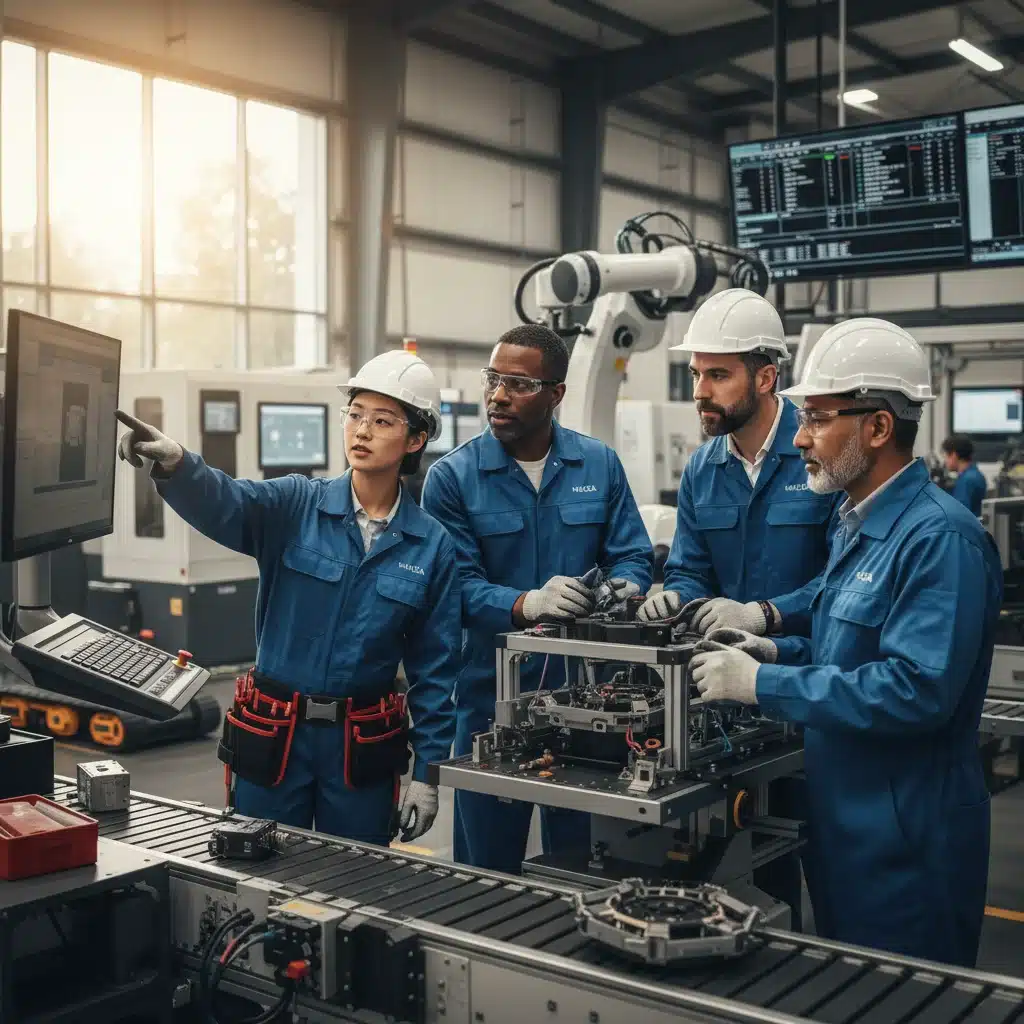
Automation and robotics are at the forefront of this revolution. Collaborative robots (cobots) work alongside human employees, handling repetitive or dangerous tasks, improving safety, and increasing productivity. Advanced robotics can perform complex assembly operations with precision and speed, reducing the need for extensive manual labor and mitigating the impact of higher domestic wages. This automation allows for greater consistency in product quality and faster production cycles, which are critical for competitive advantage.
Additive manufacturing, or 3D printing, is another game-changer. It enables the creation of complex parts and prototypes on demand, reducing lead times and material waste. For specialized components or low-volume production, 3D printing can be highly cost-effective, allowing companies to produce items domestically that might otherwise require complex tooling and long lead times from offshore suppliers. This technology supports customization and rapid iteration, vital for innovation.
The Internet of Things (IoT) connects machines, sensors, and systems across the factory floor, providing real-time data on production processes, equipment performance, and inventory levels. This data analytics capability allows manufacturers to optimize operations, predict maintenance needs, and identify bottlenecks, leading to significant improvements in efficiency and reduced downtime. Predictive maintenance, powered by AI and IoT, ensures that machines are serviced before they break down, maximizing uptime and production capacity.
Artificial intelligence (AI) and machine learning (ML) are being applied to various aspects of manufacturing, from optimizing production schedules to enhancing quality control through computer vision. AI algorithms can analyze vast datasets to identify patterns and make intelligent decisions, leading to more efficient resource allocation and improved product consistency. These technologies empower manufacturers to operate with greater intelligence and responsiveness, making domestic operations highly competitive.
Furthermore, digital twin technology creates virtual replicas of physical assets, processes, and systems, allowing manufacturers to simulate and test changes in a virtual environment before implementing them in the real world. This reduces risks, accelerates innovation, and optimizes performance across the entire production lifecycle. These technological leaps are crucial enablers for Manufacturing Reshoring 2026, making domestic production a viable and attractive option for a wider range of industries.
Challenges and Opportunities for a 5% Increase in Domestic Production
While the momentum for Manufacturing Reshoring 2026 is strong, achieving a 5% increase in domestic production is not without its challenges. One of the primary hurdles is the availability of a skilled workforce. Decades of offshoring led to a decline in manufacturing jobs and a subsequent reduction in vocational training programs. As companies reshore, they face a shortage of skilled labor, including machinists, welders, engineers, and technicians. Addressing this requires significant investment in workforce development, retraining programs, and partnerships between industry and educational institutions.
Another challenge is the initial capital investment required to set up new factories or retool existing ones. Moving production facilities involves substantial costs for land, construction, machinery, and technology. While government incentives can help, companies need to carefully evaluate the long-term return on investment (ROI) to justify these upfront expenditures. Access to affordable financing and clear regulatory pathways are crucial for facilitating these investments.
The existing supply chain infrastructure also needs to adapt. While some raw materials and components can be sourced domestically, many still rely on global networks. Reshoring efforts will need to spur the development of local supplier ecosystems to ensure a steady and reliable flow of inputs. This includes fostering smaller businesses that can provide specialized components and services, creating a more robust and localized industrial base.
Despite these challenges, the opportunities presented by a 5% increase in domestic production are immense. Economically, it translates to job creation, increased tax revenues, and a stronger GDP. Manufacturing jobs often pay higher wages and provide better benefits, contributing to a thriving middle class. The multiplier effect of manufacturing means that each factory job supports several other jobs in related industries, from logistics to professional services.
Strategically, a stronger domestic manufacturing base enhances national security by ensuring access to critical goods and technologies, particularly in sectors like defense, healthcare, and advanced electronics. It reduces reliance on potentially adversarial nations for essential supplies, bolstering national resilience in times of crisis. This strategic independence is a powerful argument for continued investment in domestic production.
Furthermore, reshoring fosters innovation. When research and development, design, and manufacturing are co-located, the feedback loop is shortened, leading to faster prototyping, quicker problem-solving, and more rapid introduction of new products. This synergy between different stages of the product lifecycle is a significant competitive advantage, driving technological leadership and economic growth. The push for Manufacturing Reshoring 2026 is therefore not just about bringing jobs home, but about building a more innovative, resilient, and prosperous future.
Key Industries Leading the Reshoring Movement
Several key industries are at the forefront of the Manufacturing Reshoring 2026 trend, driven by sector-specific needs and strategic considerations. The electronics industry, for instance, has been particularly vulnerable to supply chain disruptions and intellectual property theft. Companies are increasingly looking to bring the production of semiconductors, circuit boards, and consumer electronics back home to secure critical components and protect sensitive technologies. The high value and strategic importance of these products make domestic production an attractive proposition.
The medical device and pharmaceutical industries are also strong candidates for reshoring. The pandemic highlighted the critical need for domestic production of essential medical supplies, from PPE to ventilators and vaccines. Governments and healthcare providers are now prioritizing local sourcing to ensure a stable supply of life-saving products, reducing dependence on foreign manufacturers. The stringent regulatory requirements and high-quality standards in these sectors also lend themselves well to domestic oversight and control.
Automotive manufacturing, a cornerstone of many industrial economies, is undergoing its own reshoring transformation. As vehicles become more technologically advanced, incorporating complex electronics, sensors, and software, the need for integrated domestic supply chains becomes more apparent. The shift towards electric vehicles (EVs) also presents an opportunity for new domestic manufacturing ecosystems, particularly for battery production and EV components, further contributing to the 5% increase in domestic production.
Aerospace and defense industries have always maintained a significant domestic manufacturing presence due to national security concerns. However, even within these sectors, there’s a renewed emphasis on strengthening local supply chains and reducing reliance on foreign components, especially for advanced technologies. Government contracts often include mandates for domestic content, reinforcing the reshoring trend in these critical areas.
Textiles and apparel, surprisingly, are also seeing a resurgence. While these industries were among the first to offshore, advancements in automation, on-demand manufacturing, and sustainable production methods are making domestic production more competitive. Brands are recognizing the value of faster turnaround times, greater design flexibility, and the ability to respond quickly to fashion trends, which are all benefits of local manufacturing. This allows for smaller, more frequent production runs, reducing waste and improving responsiveness to market demands.
These examples illustrate that reshoring is not a monolithic movement but a strategic response tailored to the unique demands and opportunities within different industrial sectors. The cumulative effect of these industry-specific shifts will be pivotal in achieving the projected 5% increase in domestic production by 2026, reshaping the economic landscape for years to come.
The Role of Government Policy and International Cooperation
The ambitious goal of a 5% increase in domestic production by 2026 through Manufacturing Reshoring 2026 cannot be achieved by industry alone; government policy plays a pivotal role. Proactive government initiatives are essential to create an environment conducive to reshoring and to mitigate some of the inherent challenges. These policies often fall into several key categories: financial incentives, regulatory reforms, workforce development, and strategic investments.
Financial incentives, such as tax credits for capital expenditures, grants for R&D in advanced manufacturing, and subsidies for energy-efficient production, can significantly reduce the cost burden for companies considering reshoring. These incentives make domestic investments more attractive and help offset the initial costs of establishing or expanding facilities. Furthermore, preferential procurement policies, where government agencies prioritize domestically produced goods, can create a stable demand base for reshoring companies.
Regulatory reforms are also critical. Streamlining permitting processes, reducing bureaucratic hurdles, and ensuring a stable and predictable regulatory environment can greatly accelerate the establishment of new manufacturing facilities. Policies that support a level playing field, such as robust intellectual property protection and fair trade enforcement, are also vital to ensure that domestic manufacturers can compete effectively against foreign competitors.
Workforce development is arguably one of the most important areas for government intervention. This includes funding for vocational training programs, apprenticeships, and STEM education initiatives designed to equip the next generation of workers with the skills needed for advanced manufacturing. Partnerships between educational institutions and industries can ensure that training programs are aligned with current and future industry needs, creating a pipeline of skilled talent for reshoring companies.
Strategic investments in infrastructure, such as improved transportation networks, reliable energy grids, and high-speed internet access, are foundational for a thriving manufacturing sector. These investments reduce operational costs and enhance logistical efficiency, making domestic locations more competitive. Additionally, government-funded research and development centers can foster innovation and help domestic industries stay at the cutting edge of manufacturing technology.
Beyond national policies, international cooperation also has a role to play. While reshoring focuses on domestic production, it doesn’t necessarily mean isolation. Collaborations with allied nations on supply chain resilience, technology sharing, and harmonized standards can create more secure and efficient regional manufacturing blocs. This allows countries to leverage each other’s strengths while reducing vulnerabilities to distant, less predictable supply sources. The combination of strong domestic policy and strategic international partnerships will be instrumental in realizing the full potential of Manufacturing Reshoring 2026.
The Long-Term Impact on Economic Growth and Innovation
The projected 5% increase in domestic production by 2026, driven by Manufacturing Reshoring 2026, promises a profound long-term impact on economic growth and innovation. This shift is not merely about relocating factories; it represents a fundamental restructuring of economic priorities, emphasizing resilience, self-sufficiency, and advanced technological integration. The ripple effects will extend far beyond the factory floor, influencing various facets of the economy.
One of the most significant impacts will be on job creation. As manufacturing returns, it brings with it a demand for a diverse range of skills, from highly specialized engineers and data scientists to skilled technicians and assembly line workers. These jobs often offer competitive wages and benefits, contributing to a stronger middle class and reducing income inequality. The “multiplier effect” of manufacturing jobs means that each direct manufacturing position supports several indirect jobs in sectors like logistics, raw material supply, administrative services, and local retail, creating a virtuous cycle of economic activity.
Increased domestic production also boosts national GDP. By producing more goods internally, a nation reduces its reliance on imports, improving its trade balance and strengthening its economic sovereignty. The added value created through manufacturing processes contributes directly to economic output, fostering sustained growth. This economic stability makes a country more attractive for further investment, both domestic and foreign, creating a positive feedback loop.
Furthermore, reshoring acts as a powerful catalyst for innovation. When manufacturing, research and development, and product design are co-located, the synergy between these functions accelerates the innovation cycle. Engineers can work directly with production teams to refine designs, troubleshoot issues, and implement new technologies more quickly. This close collaboration fosters a culture of continuous improvement and allows for rapid prototyping and market deployment of new products, keeping domestic industries at the leading edge of technological advancement.
The emphasis on advanced manufacturing technologies, such as AI, robotics, and additive manufacturing, will also drive investment in these areas, creating new industries and specialized services. This technological dynamism ensures that the economy remains competitive and adaptable to future challenges. It also encourages educational institutions to align their curricula with these emerging needs, preparing a future workforce capable of driving sustained innovation.
Finally, a resilient domestic manufacturing base enhances national security and preparedness. In times of crisis, whether economic, geopolitical, or health-related, having the capacity to produce essential goods domestically is invaluable. It reduces vulnerability to external shocks and ensures that a nation can respond effectively to unforeseen challenges. The long-term benefits of Manufacturing Reshoring 2026 extend beyond mere economic figures, contributing to a more secure, innovative, and prosperous future for the nation as a whole.
Conclusion: A Reshaped Manufacturing Future
The manufacturing sector stands at the precipice of a significant transformation, with Manufacturing Reshoring 2026 leading the charge towards a more resilient and domestically focused production landscape. The projected 5% increase in domestic production by 2026 is not merely an optimistic forecast but a tangible outcome driven by compelling economic imperatives, a critical need for supply chain resilience, and groundbreaking technological advancements. The lessons learned from recent global disruptions have made it abundantly clear that relying solely on distant, extended supply chains carries unacceptable risks.
This shift is being fueled by a comprehensive re-evaluation of the true costs of offshoring, where factors like intellectual property protection, quality control, and the agility to respond to market changes now weigh heavily against traditional labor cost advantages. Technological innovations, from advanced robotics and automation to AI and digital twins, are making domestic production increasingly competitive and efficient, leveling the playing field and often surpassing the capabilities of older, offshore facilities.
While challenges remain, particularly in workforce development and initial capital investment, the opportunities for economic growth, job creation, and enhanced national security are immense. Governments are increasingly playing a proactive role, implementing policies and incentives designed to foster a favorable environment for reshoring, recognizing the strategic importance of a robust domestic manufacturing base.
Looking ahead, the manufacturing sector will be characterized by greater localization, increased technological sophistication, and a stronger emphasis on sustainability and ethical production. Companies that embrace these trends will not only secure their supply chains but also gain a significant competitive edge in a global market that increasingly values resilience, transparency, and innovation. The journey towards Manufacturing Reshoring 2026 is more than just a trend; it’s a strategic evolution poised to reshape economies and industries for decades to come, forging a future where domestic production is a cornerstone of national prosperity and global competitiveness.