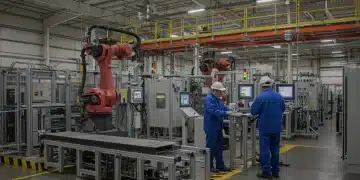
2026 Labor Market: 4.0% Unemployment & Sectoral Shifts
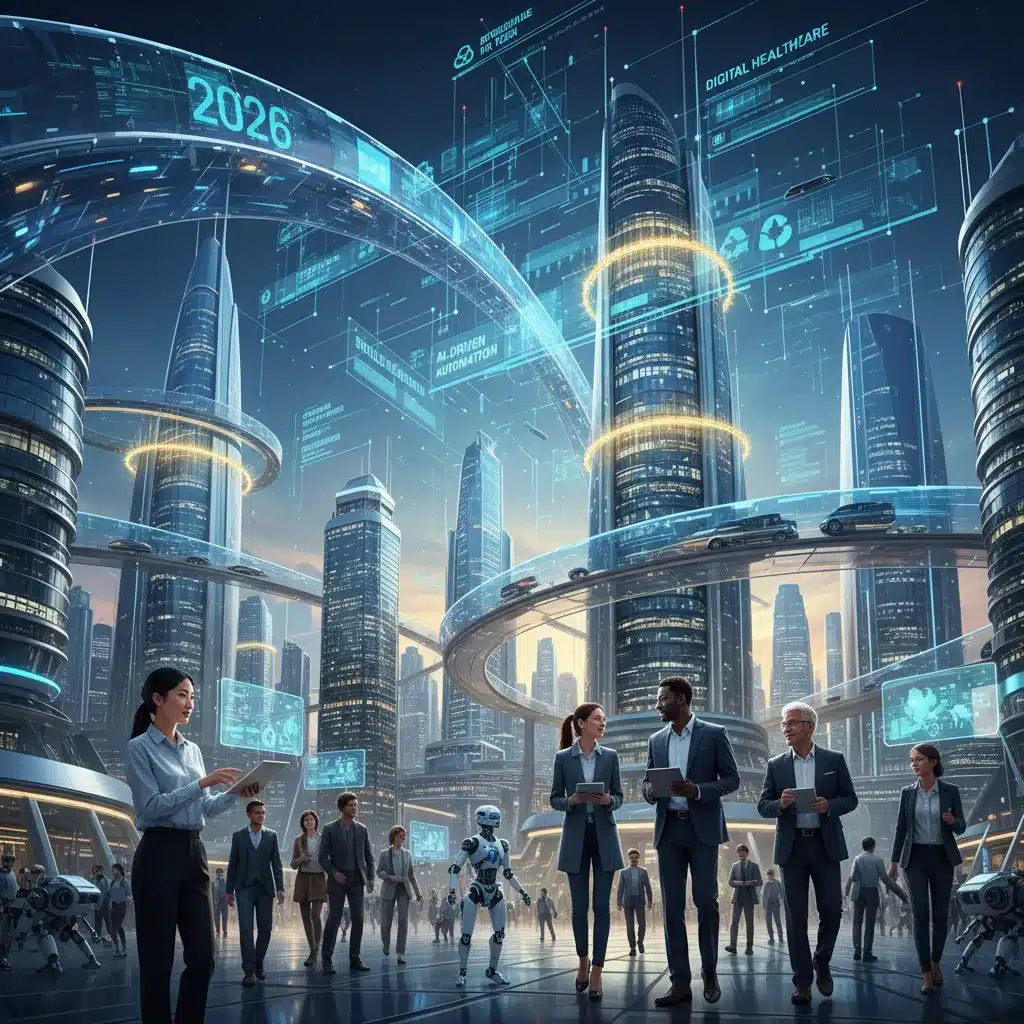
The global economy is a dynamic entity, constantly reshaped by technological advancements, geopolitical shifts, and evolving societal needs. As we cast our gaze forward to 2026, the 2026 Labor Market presents a fascinating landscape, characterized by a projected 4.0% unemployment rate and profound sectoral transformations. This intricate interplay of macro-economic indicators and micro-level industry shifts will define the future of work, demanding adaptability from both employers and employees. Understanding these underlying currents is not merely an academic exercise; it is a strategic imperative for businesses aiming to thrive and individuals seeking to navigate their career paths successfully.
The 4.0% unemployment rate, while seemingly a positive indicator of a robust economy, masks a deeper narrative of change. It suggests a labor market nearing full employment, yet one that will be fundamentally different from what we have known. This article delves into the nuances of this projection, exploring the forces driving these changes, the sectors poised for growth or disruption, and the strategies necessary to adapt to this evolving reality. We will analyze the impact of automation, artificial intelligence, and green technologies, alongside demographic shifts and global supply chain reconfigurations, to paint a comprehensive picture of the 2026 Labor Market.
The 4.0% Unemployment Rate: A Closer Look at the 2026 Labor Market
A projected unemployment rate of 4.0% for 2026 is often considered a benchmark for a healthy, near full-employment economy. Historically, such low rates have been associated with strong economic growth, increased consumer spending, and a competitive job market where employers vie for talent. However, the context surrounding this 4.0% in 2026 is crucial. It’s not just a number; it reflects a culmination of trends that have been building for years, accelerated by recent global events and technological breakthroughs.
One of the primary drivers behind this low unemployment projection is the continued recovery and stabilization of global economies post-pandemic. Governments and central banks have implemented various fiscal and monetary policies to stimulate growth, which are expected to bear fruit by 2026. Furthermore, investments in infrastructure, renewable energy, and digital transformation initiatives are creating new job opportunities, offsetting some of the job losses from traditional sectors.
However, this low unemployment rate doesn’t necessarily imply an evenly distributed prosperity. It will likely be characterized by significant skill mismatches, where a surplus of workers in declining industries coexists with acute shortages in emerging fields. This phenomenon underscores the importance of continuous learning and reskilling, a recurring theme when discussing the future of the 2026 Labor Market. The demand for highly specialized skills in areas like artificial intelligence, cybersecurity, and data analytics will surge, while roles susceptible to automation may see further contraction.
Moreover, the nature of work itself is transforming. The rise of the gig economy, remote work, and hybrid models will continue to evolve, offering both flexibility and new challenges regarding worker benefits, protections, and career progression. The 4.0% unemployment rate, therefore, needs to be interpreted with an understanding of these underlying structural shifts that are redefining employment in the 2026 Labor Market. It is a testament to economic resilience, but also a call to action for proactive adaptation.
Sectoral Shifts: Winners and Losers in the 2026 Labor Market
The projected 4.0% unemployment rate in 2026 will not be uniformly distributed across all industries. Instead, we anticipate significant sectoral shifts, with some industries experiencing robust growth and talent shortages, while others face consolidation, automation, and a need for workforce retraining. Understanding these shifts is paramount for businesses to strategize and for individuals to align their career development with future demand.
Growing Sectors: The Engines of the 2026 Labor Market
Several sectors are poised for substantial growth, driven by technological innovation, demographic trends, and global imperatives. These include:
- Technology and Digital Services: This sector will continue to be a dominant force. Demand for software developers, AI specialists, data scientists, cybersecurity analysts, and cloud architects will remain exceptionally high. The proliferation of 5G, IoT, and advanced analytics will fuel this expansion, making it a cornerstone of the 2026 Labor Market.
- Healthcare and Biotechnology: An aging global population and advancements in medical science will ensure sustained growth in healthcare. Roles in geriatric care, specialized nursing, medical research, bioinformatics, and telehealth will be in high demand. Biotechnology, especially in personalized medicine and gene therapies, will also see significant investment and job creation.
- Renewable Energy and Green Technologies: The global push towards sustainability and decarbonization will create a burgeoning market for green jobs. Engineers specializing in solar, wind, and geothermal energy, environmental consultants, sustainable urban planners, and electric vehicle technicians will be critical. This sector is not just about energy production but also encompasses sustainable manufacturing, waste management, and conservation efforts, all contributing to the evolving 2026 Labor Market.
- Advanced Manufacturing and Robotics: While traditional manufacturing may decline, advanced manufacturing, characterized by automation, robotics, and smart factories (Industry 4.0), will grow. This will require a new breed of skilled workers capable of operating, maintaining, and programming sophisticated machinery, as well as those involved in supply chain optimization and logistics.
- Education and Training: The constant need for upskilling and reskilling in a rapidly changing labor market will drive demand for educators, corporate trainers, and instructional designers, particularly in vocational and technical fields.
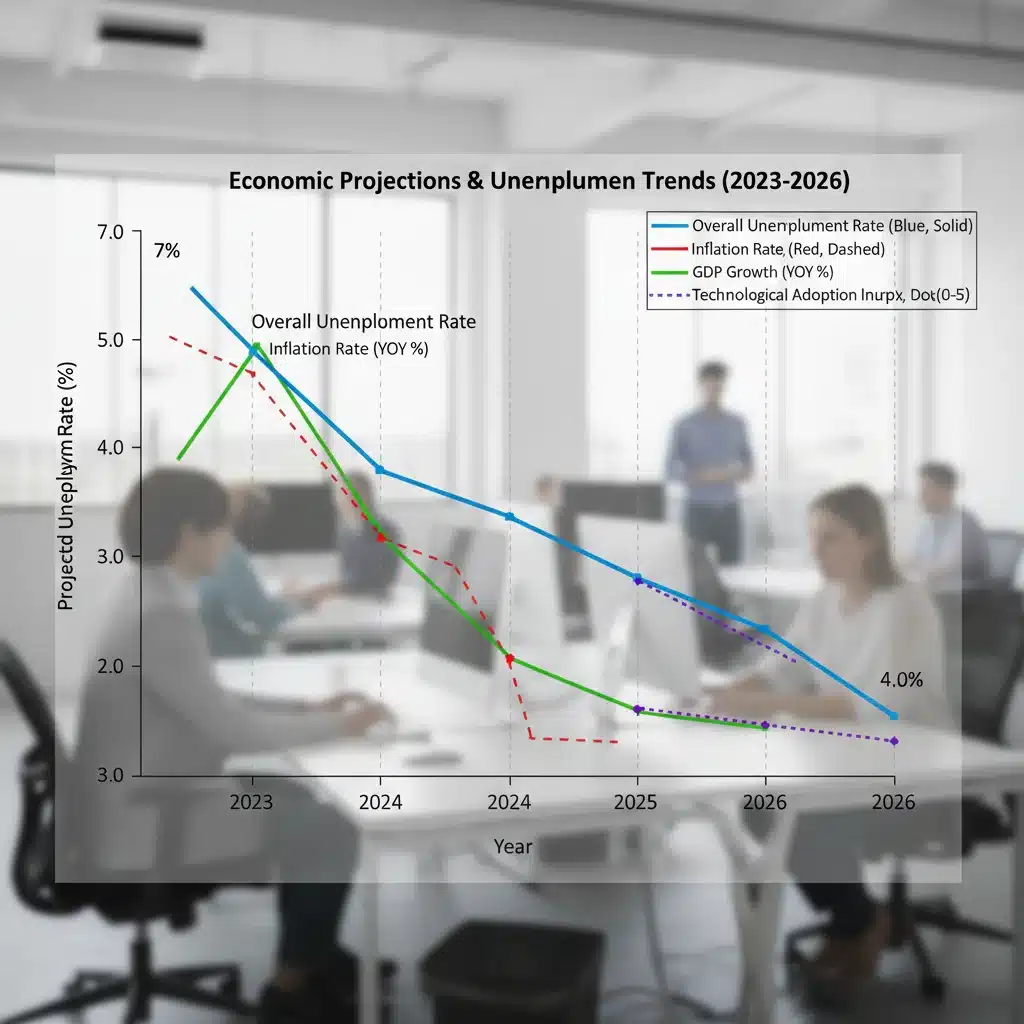
Transforming/Declining Sectors: Adaptation is Key
Conversely, certain sectors will face significant challenges, necessitating adaptation, innovation, and workforce transition. These include:
- Traditional Retail: E-commerce will continue to reshape retail, leading to further job displacement in brick-and-mortar stores, particularly for roles involving routine tasks. The focus will shift towards experiential retail, personalized customer service, and logistics for online fulfillment.
- Fossil Fuel Industries: As the world transitions to renewable energy, jobs in coal mining, oil and gas extraction, and related manufacturing will continue to decline. This sector faces a critical need for workforce retraining and diversification into new energy sources.
- Administrative and Clerical Support: Automation and AI-powered tools will significantly impact administrative roles, performing routine tasks more efficiently. This will require administrative professionals to develop higher-level skills in data analysis, project management, and digital literacy.
- Certain Manufacturing Segments: Labor-intensive and low-skill manufacturing jobs, especially in sectors susceptible to automation or outsourcing, will continue to face pressure. The emphasis will shift to high-skill, specialized manufacturing processes.
- Transportation and Logistics (Traditional): While overall logistics will grow, the advent of autonomous vehicles and advanced route optimization software will transform traditional driving roles. New jobs will emerge in managing these autonomous fleets and developing the underlying technology.
The 2026 Labor Market will thus be defined by a dynamic rebalancing of skills and industries. Policymakers, educators, and businesses must collaborate to facilitate smooth transitions, ensuring that workers are equipped with the competencies needed for the jobs of tomorrow.
Key Drivers of Change in the 2026 Labor Market
Beyond the immediate economic recovery, several powerful forces are fundamentally reshaping the 2026 Labor Market. These drivers are interconnected and will collectively determine the landscape of employment, skills, and organizational structures.
Technological Advancements: AI, Automation, and Digitalization
Artificial Intelligence (AI) and automation are not new concepts, but their integration into virtually every industry is accelerating. By 2026, AI will be a pervasive tool, optimizing processes, analyzing vast datasets, and even performing creative tasks. This will lead to:
- Augmentation, not just Replacement: While some routine jobs will be automated, AI will more often augment human capabilities, allowing workers to focus on higher-value, more complex tasks. This requires workers to be proficient in collaborating with AI systems.
- New Job Creation: The development, deployment, and maintenance of AI systems will create entirely new categories of jobs, from AI ethics specialists to prompt engineers and automation architects.
- Digital Literacy as a Prerequisite: A basic understanding of digital tools and platforms will no longer be an advantage but a fundamental requirement across most roles in the 2026 Labor Market.
Digitalization, encompassing everything from cloud computing to enhanced connectivity, facilitates remote work, global collaboration, and the creation of entirely new digital products and services. This trend further blurs geographical boundaries in the job market.
Demographic Shifts and Generational Dynamics
The 2026 Labor Market will also be influenced by significant demographic changes. An aging workforce in many developed nations means a potential shortage of experienced labor, while younger generations (Gen Z and Alpha) will bring new expectations regarding work-life balance, purpose-driven employment, and technological fluency. This will necessitate:
- Knowledge Transfer: Effective strategies for transferring institutional knowledge from retiring workers to new entrants.
- Diversity and Inclusion: A greater emphasis on diverse workforces to harness varied perspectives and address talent gaps.
- Flexible Work Arrangements: To attract and retain talent from different generations, flexible work options will become standard, not perks.
Globalization and Supply Chain Reshaping
Recent global events have highlighted the vulnerabilities of complex global supply chains. By 2026, there will be a continued trend towards diversification, regionalization, and reshoring of manufacturing and services. This impacts the 2026 Labor Market by:
- Creating Manufacturing Jobs in New Regions: As companies seek to shorten supply chains, new manufacturing hubs may emerge, potentially in developed nations.
- Increased Demand for Logistics and Supply Chain Management: The complexity of diversified supply chains will require highly skilled professionals in logistics, risk management, and data analytics.
- Geopolitical Influence: Trade policies and international relations will continue to play a significant role in shaping where jobs are created and lost.
Sustainability and the Green Economy
The urgent need to address climate change and environmental degradation is not just an ecological challenge but also a significant economic opportunity. The transition to a green economy will generate millions of jobs in:
- Renewable Energy: Installation, maintenance, and research in solar, wind, and other clean energy sources.
- Sustainable Agriculture: Innovations in food production, water management, and organic farming.
- Eco-friendly Manufacturing: Development of sustainable materials, circular economy practices, and waste reduction technologies.
These drivers collectively underscore that the 2026 Labor Market will be one of continuous evolution, demanding proactive engagement from all stakeholders.
Challenges and Opportunities in the Evolving 2026 Labor Market
The projected 4.0% unemployment rate and the significant sectoral shifts in the 2026 Labor Market present a dual landscape of formidable challenges and unprecedented opportunities. Navigating this landscape effectively will require strategic foresight and adaptive approaches from individuals, businesses, and policymakers alike.
Key Challenges
- Skills Gap and Mismatch: Perhaps the most pressing challenge is the widening gap between the skills workers possess and the skills employers need. As technology advances rapidly, traditional educational systems often struggle to keep pace, leading to a surplus of workers in declining fields and a severe shortage in emerging ones. This mismatch can lead to underemployment even with a low headline unemployment rate.
- Job Displacement due to Automation: While automation creates new jobs, it also displaces existing ones, particularly those involving repetitive or routine tasks. Managing this transition requires robust social safety nets, retraining programs, and a societal commitment to lifelong learning.
- Income Inequality: The demand for highly specialized skills often commands higher wages, potentially exacerbating income inequality. Workers in sectors with lower demand or easily automatable tasks may see stagnant wages, creating socio-economic disparities within the 2026 Labor Market.
- Mental Health and Well-being: The fast pace of change, the demand for continuous learning, and the blurring lines between work and personal life (especially with remote work) can contribute to increased stress and burnout. Employers will face the challenge of fostering supportive work environments that prioritize employee well-being.
- Cybersecurity Risks: As more work moves online and digital transformation accelerates, the risk of cyberattacks increases. This poses a threat not only to data security but also to the stability of businesses and critical infrastructure, requiring a constant investment in cybersecurity talent and infrastructure.

Emerging Opportunities
- New Career Paths: The evolving 2026 Labor Market is a fertile ground for entirely new professions. Roles in AI ethics, metaverse development, sustainable supply chain management, human-AI collaboration specialists, and personalized medicine navigators are just a few examples of potential growth areas.
- Enhanced Productivity and Innovation: The adoption of advanced technologies like AI and automation can significantly boost productivity, leading to economic growth and creating opportunities for innovation in products, services, and business models.
- Flexible Work Models: The widespread acceptance of remote and hybrid work offers greater flexibility for employees, potentially improving work-life balance and expanding the talent pool for employers beyond geographical limitations. This can also lead to more diverse and inclusive workforces.
- Lifelong Learning and Skill Development: The imperative for continuous learning presents a huge opportunity for individuals to reskill and upskill, staying relevant in a dynamic job market. Educational institutions and corporate training programs will play a vital role in facilitating this growth.
- Entrepreneurship and Gig Economy Growth: The lower barriers to entry for starting businesses and the flexibility of the gig economy will continue to foster entrepreneurship. This creates opportunities for individuals to leverage their specialized skills independently and for businesses to access a diverse pool of freelance talent.
- Social Impact and Purpose-Driven Work: As environmental and social concerns gain prominence, there’s a growing opportunity for businesses and individuals to engage in purpose-driven work, contributing to sustainable development and societal well-being. This can attract talent seeking meaningful careers in the 2026 Labor Market.
Successfully navigating the 2026 Labor Market will depend on a proactive and adaptive mindset. Embracing continuous learning, fostering innovation, and prioritizing human-centric approaches will be key to converting challenges into opportunities for growth and prosperity.
Strategies for Navigating the 2026 Labor Market
The dynamic nature of the 2026 Labor Market, characterized by a 4.0% unemployment rate and profound sectoral shifts, necessitates strategic approaches from all stakeholders. Whether you are an individual worker, a business leader, or a policymaker, proactive planning and adaptability will be crucial for success.
For Individuals: Cultivating Future-Proof Careers
- Embrace Lifelong Learning: The most critical strategy is to adopt a mindset of continuous learning. Invest in acquiring new skills, particularly those in high demand such as digital literacy, data analytics, AI proficiency, and critical thinking. Online courses, certifications, and vocational training will be invaluable.
- Develop Soft Skills: While technical skills are vital, ‘human’ skills like creativity, emotional intelligence, complex problem-solving, communication, and collaboration will be increasingly sought after, as they are difficult for machines to replicate.
- Network Actively: Build and maintain a strong professional network. Connections can lead to new opportunities, mentorship, and insights into emerging industry trends within the 2026 Labor Market.
- Be Adaptable and Resilient: The ability to adapt to change, learn new tools, and pivot careers if necessary will be a significant asset. Cultivate resilience to navigate periods of uncertainty.
- Consider Hybrid or Gig Work: Explore opportunities in the gig economy or hybrid work models if they align with your skills and career goals. This can offer flexibility and diverse income streams.
For Businesses: Building Resilient and Agile Workforces
- Invest in Upskilling and Reskilling Programs: Proactively train your existing workforce in new technologies and skills relevant to your industry’s future. This is often more cost-effective than constantly hiring new talent.
- Foster a Culture of Learning: Create an organizational culture that encourages and rewards continuous learning and experimentation. Provide access to learning resources and allocate time for skill development.
- Embrace Technology Thoughtfully: Implement AI and automation not just to cut costs, but to augment human capabilities, improve efficiency, and free up employees for higher-value work. Plan for the human impact of technological adoption.
- Prioritize Employee Well-being: Implement policies and programs that support the mental and physical health of your employees, especially in remote or hybrid environments. A healthy workforce is a productive workforce.
- Diversify Talent Acquisition: Look beyond traditional hiring pools. Embrace diversity and inclusion initiatives to tap into a wider range of talent and perspectives. Consider hiring based on potential and aptitude, not just current skill sets, to address the needs of the 2026 Labor Market.
- Strategic Workforce Planning: Conduct regular analyses of future skill needs and anticipate industry shifts. Develop long-term workforce strategies that align with your business goals and the evolving labor market.
For Policymakers and Educators: Shaping the Future of Work
- Reform Education Systems: Modernize curricula at all levels to emphasize critical thinking, digital literacy, STEM skills, and vocational training that aligns with future job demands. Integrate experiential learning and industry partnerships.
- Support Lifelong Learning Initiatives: Fund and promote accessible, affordable, and high-quality reskilling and upskilling programs for adults, particularly those in vulnerable sectors.
- Invest in Digital Infrastructure: Ensure widespread access to high-speed internet and digital tools, especially in underserved areas, to enable remote work and digital learning for all.
- Develop Adaptive Social Safety Nets: Review and update social welfare programs to support workers through job transitions, including unemployment benefits, healthcare access, and portable benefits for gig workers.
- Fostering Public-Private Partnerships: Encourage collaboration between government, industry, and educational institutions to identify future skill needs and develop targeted training programs.
- Promote Ethical AI Development: Develop regulations and guidelines for the ethical development and deployment of AI to ensure that technology serves humanity and minimizes negative impacts on the 2026 Labor Market.
By adopting these forward-thinking strategies, stakeholders can collectively ensure that the 2026 Labor Market, with its 4.0% unemployment rate, becomes a period of inclusive growth and opportunity rather than fragmentation and inequality.
The Human Element in the Automated 2026 Labor Market
As we envision the 2026 Labor Market with its projected 4.0% unemployment rate and significant technological integration, it is easy to get caught up in discussions of algorithms, automation, and data. However, at the core of this evolving landscape remains the indispensable human element. The future of work is not about replacing humans with machines, but rather about redefining the unique value that humans bring to the workplace.
The very skills that machines struggle to replicate will become the most valuable. These include:
- Creativity and Innovation: While AI can generate novel ideas, true innovation often stems from human intuition, divergent thinking, and the ability to connect disparate concepts in unique ways. The capacity for artistic expression, scientific breakthroughs, and entrepreneurial vision remains distinctly human.
- Emotional Intelligence and Empathy: Roles requiring deep human interaction, understanding emotions, building relationships, and providing compassionate care will be irreplaceable. This includes healthcare professionals, educators, therapists, human resources specialists, and customer service roles focused on complex problem-solving.
- Critical Thinking and Complex Problem-Solving: Humans excel at tackling unstructured problems, making decisions with incomplete information, and adapting to unforeseen circumstances. The ability to analyze, synthesize, and evaluate information critically, especially in ethical dilemmas or novel situations, will be paramount.
- Ethical Judgment and Values: As AI becomes more powerful, the need for human oversight to ensure ethical deployment, fairness, and alignment with societal values will increase. Roles in AI ethics, governance, and policy will become crucial.
- Leadership and Motivation: Inspiring teams, fostering collaboration, and guiding organizational vision requires uniquely human qualities of leadership, charisma, and the ability to motivate others towards a common goal.
The 2026 Labor Market will demand a shift in perspective: from focusing on tasks that can be automated to emphasizing skills that are inherently human. This means a greater investment in developing these ‘soft skills’ alongside technical competencies. Universities and vocational schools will need to adapt their curricula to foster these attributes, and businesses will need to recognize and reward them.
Moreover, the human element extends to the very structure and culture of organizations. Companies that prioritize human-centric design, employee well-being, psychological safety, and a sense of purpose will be better positioned to attract and retain top talent. The challenge will be to create environments where humans and AI can collaborate seamlessly, each leveraging their unique strengths to achieve outcomes that neither could accomplish alone.
Ultimately, the 4.0% unemployment rate in 2026, within a landscape of technological transformation, is not a signal of human obsolescence. Instead, it is an invitation to elevate human potential, focusing on those aspects of work that make us uniquely human and irreplaceable. The future of the 2026 Labor Market is a collaborative one, where technology serves to empower and amplify human ingenuity.
Conclusion: Preparing for the Future of the 2026 Labor Market
The 2026 Labor Market, with its projected 4.0% unemployment rate, represents a pivotal moment in the evolution of work. It signifies an economy operating near full capacity, yet one undergoing profound structural changes driven by technological advancements, demographic shifts, and a global pivot towards sustainability. This landscape, while presenting compelling opportunities for growth and innovation, also brings significant challenges in the form of skills gaps, job displacement, and the imperative for continuous adaptation.
For individuals, the message is clear: lifelong learning is no longer a luxury but a necessity. Cultivating both cutting-edge technical skills and uniquely human attributes such as creativity, emotional intelligence, and critical thinking will be essential for career resilience and progression. Embracing adaptability and viewing change as an opportunity for growth will define successful careers in the coming years.
Businesses must evolve into agile, learning organizations. Investing in workforce development, fostering inclusive cultures, and strategically integrating technology to augment human capabilities will be key to maintaining competitiveness and attracting talent. Prioritizing employee well-being and creating environments where innovation thrives will differentiate leading companies in the 2026 Labor Market.
Policymakers and educators bear the crucial responsibility of building the infrastructure for a future-ready workforce. This includes reforming educational systems, supporting accessible reskilling initiatives, and creating robust social safety nets that facilitate smooth transitions for workers impacted by economic shifts. Collaborative efforts between public and private sectors will be vital in shaping an equitable and prosperous labor future.
In essence, the 4.0% unemployment rate in 2026 is more than just a statistic; it is an indicator of a transformed economic reality. The future of the 2026 Labor Market is not a predetermined outcome but a dynamic process that requires conscious effort and strategic collaboration from every segment of society. By understanding the forces at play and proactively implementing adaptive strategies, we can collectively build a more resilient, innovative, and inclusive world of work for all.