2026 Healthcare Assistance: Medicaid & ACA Subsidies Explained

Understanding 2026 healthcare assistance is crucial for managing medical expenses; this guide clarifies Medicaid and ACA subsidies, detailing how these vital programs can reduce your healthcare costs by at least 15%.
Navigating the complex world of healthcare can feel overwhelming, especially when considering the financial implications. However, understanding your options for 2026 healthcare assistance, particularly through Medicaid and Affordable Care Act (ACA) subsidies, can significantly reduce your medical expenses, potentially by 15% or more. This guide aims to demystify these programs, offering clear insights into how they can benefit you and your family.
Understanding the Landscape of 2026 Healthcare Assistance
As we look towards 2026, the landscape of healthcare assistance in the United States continues to evolve. Many Americans grapple with rising medical costs, making it more important than ever to explore available support systems. Federal and state programs are designed to make healthcare more accessible and affordable, with Medicaid and ACA subsidies standing out as primary avenues for financial relief.
These programs are not just about providing insurance; they are about ensuring that preventative care, necessary treatments, and prescription medications are within reach for millions. Eligibility criteria and benefit structures can vary, making it essential for individuals and families to understand the specifics of each program as they plan for their healthcare needs in the coming year.
The Role of Government in Healthcare Affordability
The government plays a crucial role in regulating and subsidizing healthcare to protect its citizens from catastrophic medical debt. This involvement is primarily seen through legislation like the Affordable Care Act (ACA) and the long-standing Medicaid program. These initiatives reflect a commitment to public health, aiming to create a safety net for those who might otherwise be unable to afford adequate care.
- Ensuring basic healthcare access for all income levels.
- Protecting individuals from high out-of-pocket costs.
- Promoting preventative care and early treatment.
- Stabilizing the healthcare market through regulated insurance options.
Ultimately, a clear understanding of these foundational elements of 2026 healthcare assistance will empower you to make informed decisions about your health coverage. It’s about more than just finding a plan; it’s about finding the right support to maintain your well-being without financial strain.
Medicaid in 2026: Eligibility and Benefits Explained
Medicaid remains a cornerstone of healthcare assistance for millions of low-income Americans. In 2026, its fundamental purpose—providing comprehensive health coverage to eligible individuals and families—will continue unchanged, although specific state-level expansions and administration might see minor adjustments. Understanding who qualifies and what benefits are offered is crucial for those seeking this vital support.
Eligibility for Medicaid is primarily based on Modified Adjusted Gross Income (MAGI) relative to the Federal Poverty Level (FPL). States that have expanded Medicaid under the ACA generally cover adults with incomes up to 138% of the FPL, while non-expansion states have more restrictive criteria, often focusing on specific categories such as pregnant women, children, and individuals with disabilities. It’s important to check your state’s specific guidelines as they can vary significantly.
Who Qualifies for Medicaid?
The criteria for Medicaid eligibility can be complex, but generally involve income thresholds and specific demographic categories. These categories ensure that the most vulnerable populations receive the care they need.
- Low-income adults, particularly in states with Medicaid expansion.
- Pregnant women and children up to age 19.
- Individuals with disabilities who meet certain income and resource limits.
- Some Medicare beneficiaries who need assistance with premiums and cost-sharing.
The benefits provided by Medicaid are extensive, often including doctor visits, hospital care, prescription drugs, mental health services, and long-term care. These comprehensive benefits are designed to cover a wide range of medical needs, ensuring that eligible individuals receive necessary care without significant out-of-pocket expenses. Staying informed about your state’s specific Medicaid program in 2026 will be key to accessing these benefits effectively.
ACA Subsidies in 2026: Reducing Your Premium Costs
For those who don’t qualify for Medicaid but still find health insurance premiums challenging, the Affordable Care Act (ACA) subsidies offer a critical lifeline. These subsidies, officially known as premium tax credits, are designed to lower the monthly cost of health insurance plans purchased through the Health Insurance Marketplace. As we approach 2026, these subsidies continue to play a pivotal role in making health coverage more affordable for middle-income individuals and families.
The amount of subsidy you receive is based on a sliding scale, primarily determined by your household income and the cost of the benchmark silver plan in your area. The goal is to ensure that no one pays more than a certain percentage of their income for health insurance, making comprehensive plans accessible even with moderate earnings. This financial assistance can make a significant difference in your annual healthcare budget.

How Premium Tax Credits Work
Premium tax credits can be taken in advance to lower your monthly premium payments or claimed when you file your federal income tax return. Most people choose to have them paid directly to their insurance company each month, which immediately reduces their out-of-pocket costs.
- Eligibility based on household income relative to the Federal Poverty Level (FPL).
- Must purchase a plan through the official Health Insurance Marketplace.
- Cannot be eligible for other minimum essential coverage, like Medicare or Medicaid.
- The amount adjusts based on your income and the cost of benchmark plans.
Understanding these subsidies is vital for anyone exploring health insurance options in 2026. They are a powerful tool to make quality healthcare coverage attainable, helping to bridge the gap between individual financial capacity and the often-high cost of insurance, ultimately contributing to better health outcomes and financial security.
Comparing Medicaid and ACA Subsidies: Which is Right for You?
Deciding between Medicaid and ACA subsidies, or determining which one you might qualify for, is a critical step in securing your 2026 healthcare assistance. While both programs are designed to make healthcare affordable, they target different income brackets and offer distinct benefits. Understanding these differences will help you navigate your options effectively.
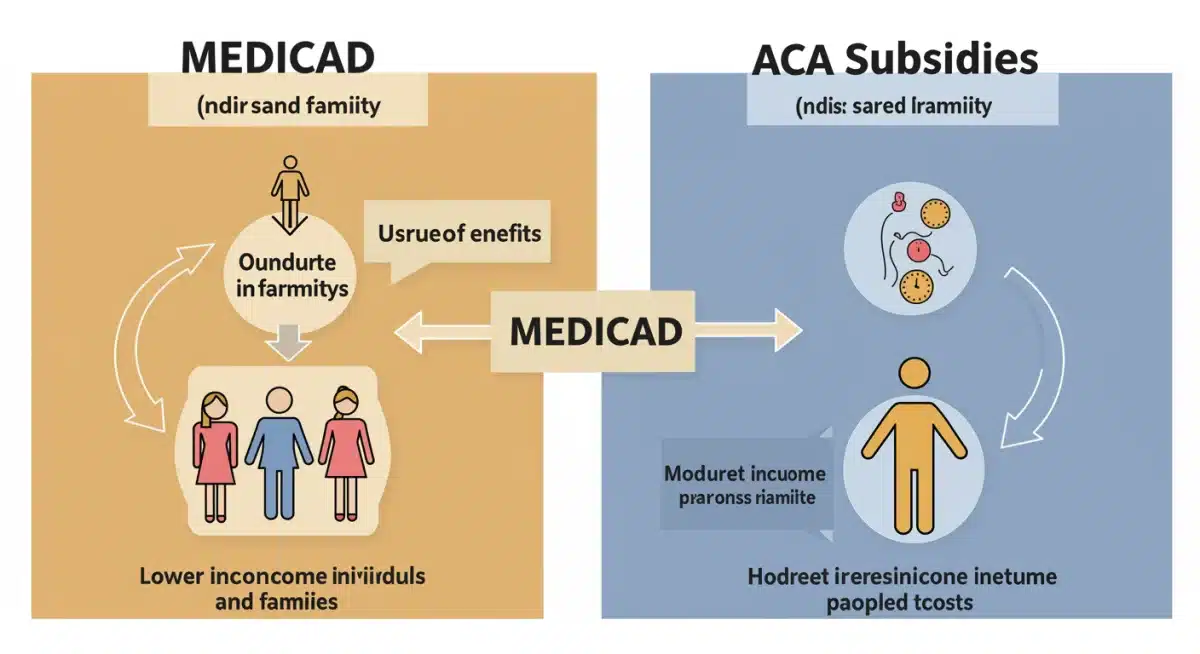
Medicaid primarily serves individuals and families with very low incomes, often providing comprehensive coverage at little to no cost. ACA subsidies, on the other hand, are geared towards those with moderate incomes who earn too much to qualify for Medicaid but still need financial help to afford Marketplace plans. Your household income and family size are the most significant factors in determining which program is suitable.
Key Differences in Eligibility and Benefits
The distinctions between Medicaid and ACA subsidies are clear, impacting who qualifies and what kind of coverage they receive.
- Income Thresholds: Medicaid has lower income limits, typically below 138% of the FPL in expansion states. ACA subsidies are available for incomes between 100% and 400% of the FPL (though current legislation has temporarily removed the upper income cap for subsidies).
- Cost-Sharing: Medicaid generally offers very low or no premiums, deductibles, and co-pays. ACA plans with subsidies still have premiums and cost-sharing, though the subsidies significantly reduce these amounts.
- Coverage Scope: Medicaid often provides a broader range of benefits, including long-term care and non-emergency medical transportation, which may not be fully covered by Marketplace plans.
It’s important to accurately assess your projected income for 2026 and explore the specific rules in your state. Many people find themselves in a ‘Medicaid gap’ in non-expansion states, where their income is too high for Medicaid but too low for ACA subsidies. However, for most, a clear path exists to affordable healthcare through one of these programs, making it easier to secure essential coverage.
Maximizing Your Savings: Strategies for Lowering Costs by 15% or More
Achieving a 15% or greater reduction in your healthcare costs through 2026 healthcare assistance is an attainable goal with strategic planning. Beyond simply enrolling in Medicaid or utilizing ACA subsidies, there are several proactive steps you can take to maximize your savings and ensure you’re getting the most value from your healthcare plan. It’s about being an informed consumer and making smart choices.
One primary strategy involves carefully comparing plans on the Health Insurance Marketplace during open enrollment. Don’t just stick with what you had last year; plans and prices change annually. Look at deductibles, co-pays, out-of-pocket maximums, and prescription drug coverage. Sometimes, a slightly higher premium for a plan with lower deductibles can save you money in the long run, especially if you anticipate significant medical needs.
Smart Choices for Greater Savings
Beyond selecting the right plan, several habits and choices can further reduce your healthcare spending.
- Utilize preventative care: Most plans cover preventative services at no cost. Regular check-ups, screenings, and vaccinations can prevent more serious, costly conditions.
- Use in-network providers: Staying within your plan’s network significantly reduces costs compared to out-of-network care.
- Consider generic prescriptions: Generic drugs are chemically identical to their brand-name counterparts but cost significantly less.
- Understand your benefits: Know what your plan covers and what it doesn’t. This prevents unexpected bills for services you thought were included.
By diligently exploring all aspects of your healthcare coverage and making informed decisions, you can significantly reduce your financial burden. Whether it’s through careful plan selection, leveraging preventative services, or understanding your drug options, every step contributes to maximizing your savings and improving your overall financial health.
Navigating the Application Process for 2026 Healthcare Assistance
Applying for 2026 healthcare assistance, whether through Medicaid or ACA subsidies, can seem daunting, but with the right information, it’s a manageable process. The key is to be prepared, understand the required documentation, and know where to seek help if you encounter difficulties. Timely and accurate submission of your application is crucial for securing coverage.
For ACA subsidies, you’ll apply through the Health Insurance Marketplace at HealthCare.gov during the annual open enrollment period, which typically runs from November 1 to January 15. Medicaid applications can be submitted year-round through your state’s Medicaid agency or through the Health Insurance Marketplace, which will forward your information to the appropriate state office if you appear eligible.
Essential Steps for a Smooth Application
To ensure a smooth application process, gather all necessary documentation and follow these steps.
- Gather personal information: This includes social security numbers, birth dates, and contact information for everyone in your household.
- Estimate your income: Provide an accurate estimate of your household income for 2026. This is critical for determining eligibility for both Medicaid and ACA subsidies.
- Collect tax information: Have recent tax returns handy, as they can help verify your income.
- Provide employer details: Information about current job-based health coverage, if applicable, is also needed.
Don’t hesitate to seek assistance from certified navigators or assisters, available through the Health Insurance Marketplace or community organizations. These professionals offer free, unbiased help with the application process, explaining your options, and helping you enroll. Their expertise can significantly ease the burden of applying and ensure you receive the maximum assistance you’re eligible for.
Future Outlook: What to Expect for Healthcare in 2026 and Beyond
As we continue past 2026, the landscape of healthcare assistance will undoubtedly keep evolving. Policy discussions, technological advancements, and shifting economic conditions all contribute to potential changes in how Medicaid and ACA subsidies operate. Staying informed about these broader trends is vital for anyone relying on or planning to utilize 2026 healthcare assistance and beyond.
There is ongoing debate about the future of healthcare legislation, with various proposals aimed at either expanding or reforming existing programs. These debates can impact funding levels, eligibility requirements, and the scope of benefits. While the core structures of Medicaid and the ACA are expected to remain, specific details could be refined to address new challenges or opportunities in healthcare delivery.
Anticipated Trends and Potential Impacts
Several key areas are likely to influence healthcare assistance in the coming years.
- Telehealth expansion: The increased adoption of telehealth services is expected to continue, potentially making healthcare more accessible and affordable, especially in rural areas.
- Focus on preventative care: Greater emphasis on preventative health and chronic disease management could lead to healthier populations and reduced long-term costs.
- Prescription drug pricing: Ongoing efforts to control prescription drug costs may lead to new policies affecting what plans cover and what patients pay.
- State-level innovations: States may continue to experiment with different models for Medicaid and Marketplace administration, offering new insights into effective healthcare delivery.
For individuals, this means a need for continued vigilance and adaptability. Regular review of policy changes, prompt updates to personal information on the Marketplace, and proactive engagement with healthcare providers will be essential. By staying informed and engaged, you can better prepare for any shifts and ensure your access to affordable, quality healthcare remains secure.
| Key Program | Brief Description |
|---|---|
| Medicaid | Government program providing comprehensive, low-cost healthcare to low-income individuals and families based on FPL. |
| ACA Subsidies | Premium tax credits reducing monthly health insurance costs for moderate-income individuals via the Health Insurance Marketplace. |
| Eligibility Factors | Primarily based on household income relative to the Federal Poverty Level (FPL) and specific state guidelines. |
| Cost Reduction | Both programs aim to reduce healthcare costs, potentially by 15% or more, through free/low-cost plans or premium assistance. |
Frequently Asked Questions About 2026 Healthcare Assistance
Medicaid provides comprehensive, often free, healthcare for very low-income individuals, primarily based on federal poverty levels. ACA subsidies (premium tax credits) reduce the cost of private health insurance plans for moderate-income individuals and families purchased through the Health Insurance Marketplace.
Eligibility for Medicaid is primarily based on your Modified Adjusted Gross Income (MAGI) compared to the Federal Poverty Level (FPL). You can check your state’s specific income limits and apply through your state’s Medicaid agency or HealthCare.gov to see if you qualify.
Yes, ACA subsidies are expected to continue in 2026. While their precise structure and income caps can be subject to legislative changes, they remain a key component of the Affordable Care Act to make health insurance more affordable for eligible individuals and families.
You’ll typically need personal information like Social Security numbers, birth dates, and income details for all household members. Proof of income (pay stubs, tax returns) and current health insurance information are also commonly required for a complete application.
Beyond subsidies, maximize savings by utilizing preventative care, choosing in-network providers, opting for generic medications, and thoroughly understanding your plan’s benefits. Comparing plans annually during open enrollment can also ensure you select the most cost-effective option for your specific needs.
Conclusion
Navigating the intricacies of healthcare can be a significant challenge, but the availability of 2026 healthcare assistance through programs like Medicaid and ACA subsidies offers substantial relief. By understanding eligibility, comparing options, and proactively applying, individuals and families can significantly reduce their healthcare expenditures, often by 15% or more. Staying informed about these vital resources and taking advantage of professional assistance ensures that quality healthcare remains accessible and affordable, contributing to both personal well-being and financial stability in the years to come.