Navigating the 2026 Job Market: Unemployment, Growth, and Future Trends
The global economy is a perpetually evolving entity, shaped by technological advancements, geopolitical shifts, and changing societal demands. As we inch closer to 2026, the landscape of employment is undergoing significant transformations, presenting both formidable challenges and unprecedented opportunities. Understanding the nuances of the 2026 Job Market is not merely an academic exercise; it’s a strategic imperative for job seekers, employers, educators, and policymakers alike. This comprehensive analysis will delve deep into the projected unemployment rates, identify key sectors poised for remarkable growth, and highlight the essential skills necessary to thrive in this dynamic environment.
Forecasting the future of work requires a meticulous examination of current trends and an informed projection of their trajectory. The lingering effects of global events, rapid digitization, and an increasing focus on sustainability are all powerful forces reshaping how, where, and by whom work is done. This article aims to provide a clear and actionable roadmap to navigate the complexities of the 2026 Job Market, offering insights that will empower individuals to make informed career decisions and help organizations prepare for the workforce of tomorrow.
Understanding the Macroeconomic Outlook for 2026
To truly grasp the dynamics of the 2026 Job Market, we must first consider the broader macroeconomic context. Economic stability, inflation rates, interest rate policies, and global trade relations all play pivotal roles in influencing employment levels. While precise predictions are always subject to unforeseen variables, current projections from leading economic institutions suggest a continued, albeit moderated, global economic expansion. This expansion is expected to be uneven, with some regions and sectors experiencing more robust growth than others.
Inflation, which has been a significant concern in recent years, is anticipated to stabilize, though it may remain slightly elevated compared to pre-pandemic levels. Central banks will likely continue to balance inflation control with supporting economic growth, impacting investment and, consequently, job creation. Geopolitical tensions also remain a wildcard, with potential to disrupt supply chains and economic confidence, which could, in turn, affect employment stability. However, a general trend towards digital transformation and green initiatives is expected to provide a foundational layer of job creation across many economies.
Projected Unemployment Rates: A Global Perspective
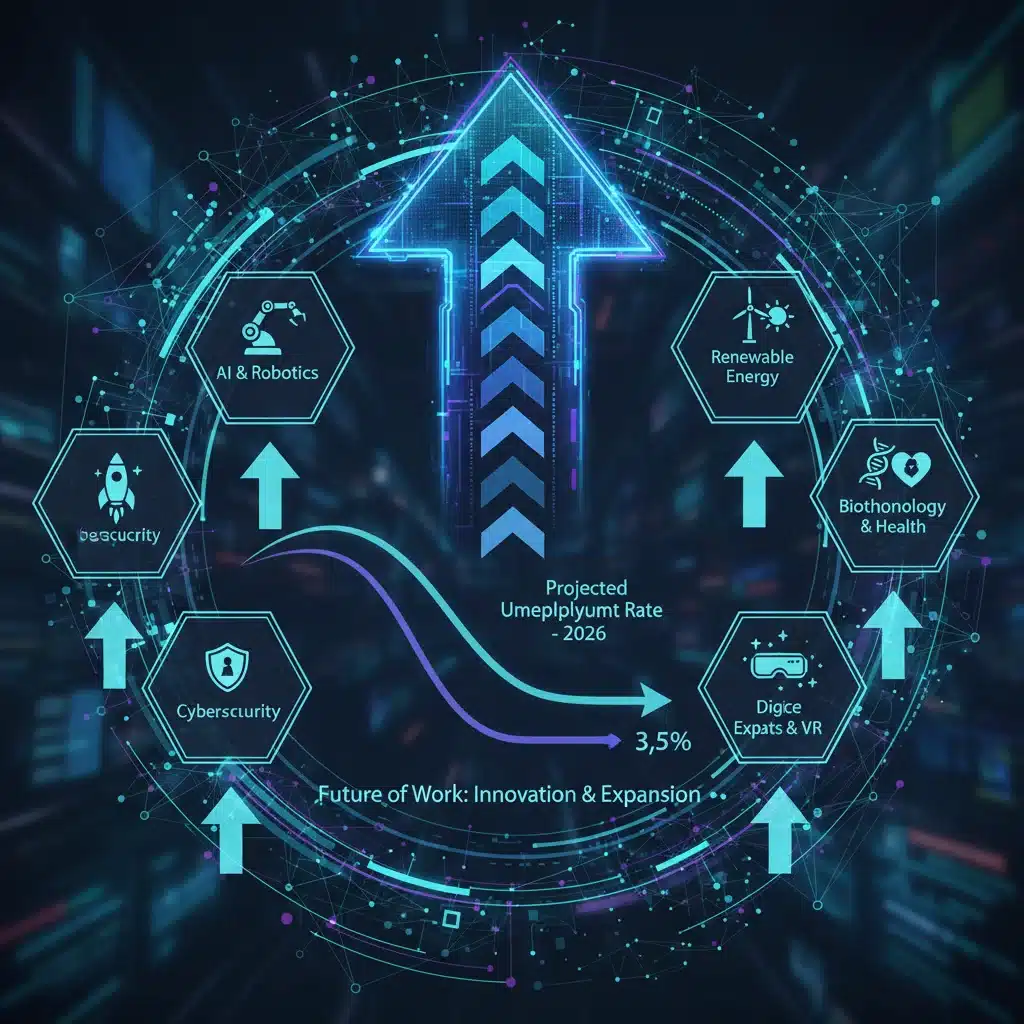
One of the most critical indicators of the health of the 2026 Job Market is the unemployment rate. Globally, unemployment rates have largely recovered from the peaks experienced during the early stages of the pandemic. As we look towards 2026, many developed economies are expected to see unemployment rates hover around their natural rates, typically considered to be between 3-5%. This suggests a relatively tight labor market in many skilled sectors, potentially leading to increased competition for talent and upward pressure on wages.
However, this aggregate figure masks significant regional and demographic disparities. Developing economies might experience higher rates due to structural challenges, while certain demographic groups, such as younger workers or those with outdated skills, could face greater difficulties in securing employment. The gig economy and flexible work arrangements are also expected to continue expanding, which could impact how unemployment is measured and perceived. It’s crucial for policymakers to implement targeted programs to address these specific challenges and ensure equitable access to opportunities within the evolving 2026 Job Market.
High-Growth Sectors in the 2026 Job Market
The future of work is not just about how many jobs there will be, but what kind of jobs. Several sectors are consistently identified as engines of growth for the 2026 Job Market, driven by innovation, demographic shifts, and global imperatives. Understanding these sectors is key for individuals planning their careers and for businesses looking to invest in future capabilities.
1. Technology and Digital Transformation
Unsurprisingly, the technology sector continues to lead the charge. Artificial intelligence (AI), machine learning (ML), cybersecurity, cloud computing, and data science are not just buzzwords; they are foundational pillars of modern economies. The demand for professionals skilled in these areas will remain exceptionally high. Roles such as AI engineers, data scientists, cybersecurity analysts, cloud architects, and software developers will be in constant demand. Furthermore, as more industries undergo digital transformation, the need for IT professionals who can bridge the gap between technology and business operations will also surge. This includes roles in IT project management, digital product management, and business analysis with a strong technical understanding. The pervasive nature of technology means that even traditional sectors will require tech-savvy individuals to drive efficiency and innovation, making digital literacy a universal requirement in the 2026 Job Market.
2. Healthcare and Life Sciences
Demographic shifts, particularly aging populations in many developed countries, coupled with advancements in medical science, will continue to fuel significant growth in healthcare and life sciences. This sector encompasses a wide array of professions, from direct patient care (nurses, doctors, therapists) to medical researchers, biotechnologists, pharmaceutical scientists, and health informatics specialists. The integration of AI and data analytics in diagnostics, personalized medicine, and drug discovery will create entirely new job categories. Telemedicine and remote patient monitoring are also expanding rapidly, requiring new skill sets in digital health management and patient engagement. The focus on preventive care and mental health services will also see increased investment and job creation, making healthcare a resilient and expanding component of the 2026 Job Market.
3. Green Economy and Sustainability
The global commitment to addressing climate change and promoting sustainable practices is creating a burgeoning ‘green economy’. This sector includes renewable energy (solar, wind, geothermal), energy efficiency, sustainable agriculture, waste management, environmental consulting, and green building design. Jobs in this area range from engineers and technicians who develop and maintain renewable energy infrastructure to environmental scientists, sustainability consultants, and policy analysts. There’s also a growing need for professionals who can integrate sustainable practices into existing industries, such as supply chain managers focused on ethical sourcing or marketing specialists promoting eco-friendly products. The transition to a net-zero economy will necessitate a fundamental shift in many industries, creating a wealth of new opportunities in the 2026 Job Market for those with relevant skills and passion.

4. E-commerce and Logistics
The acceleration of e-commerce, driven by changing consumer habits, continues to generate substantial demand across the retail and logistics sectors. This isn’t just about delivery drivers; it encompasses a complex ecosystem of professionals. Roles in digital marketing, user experience (UX) design, supply chain management, warehouse automation, last-mile delivery optimization, and data analytics for consumer behavior are all experiencing high growth. The integration of robotics and AI in warehouses and fulfillment centers is transforming logistics, creating demand for specialists in automation engineering and predictive analytics. As online shopping becomes even more sophisticated, the need for skilled professionals to manage the entire customer journey, from initial click to delivery, will be paramount in the 2026 Job Market.
5. Education and Training
With the rapid pace of change, continuous learning and upskilling are no longer optional but essential. This drives demand in the education and training sector, not just for traditional teachers, but for instructional designers, e-learning specialists, corporate trainers, and curriculum developers focused on future-proof skills. The rise of online learning platforms, micro-credentials, and personalized learning pathways will require innovative educators and technologists. Furthermore, career counselors and coaches who can guide individuals through career transitions and skill development will be increasingly vital. Investing in human capital development will be a cornerstone of success in the 2026 Job Market, making this sector a critical enabler of economic growth.
Essential Skills for the 2026 Job Market
Beyond specific job titles, certain transferable skills will be universally valuable across all sectors in the 2026 Job Market. These are often referred to as ‘future-proof’ skills because they are less susceptible to automation and are crucial for navigating complexity and driving innovation.
1. Digital Literacy and Data Fluency
A fundamental understanding of digital tools and platforms is no longer a niche skill but a basic requirement. This includes proficiency in various software applications, understanding cloud-based systems, and navigating online communication and collaboration tools. Beyond basic digital literacy, data fluency – the ability to interpret, analyze, and communicate insights from data – will be increasingly important. This doesn’t necessarily mean becoming a data scientist, but rather being able to use data to inform decision-making in any role. Every professional in the 2026 Job Market will benefit from a solid grasp of data principles.
2. Critical Thinking and Problem-Solving
As routine tasks become automated, human workers will be increasingly relied upon for complex problem-solving and critical thinking. The ability to analyze situations, identify root causes, evaluate solutions, and make reasoned judgments will be highly prized. This involves breaking down complex issues, thinking creatively, and applying logical reasoning to find effective solutions. Employers in the 2026 Job Market will seek individuals who can not only execute tasks but also think strategically and adapt to unforeseen challenges.
3. Creativity and Innovation
In an era of rapid technological change, the capacity for creativity and innovation is a significant differentiator. This isn’t just about artistic endeavors; it’s about generating new ideas, approaching problems from novel perspectives, and developing innovative solutions. Businesses will need employees who can think outside the box, challenge the status quo, and contribute to the development of new products, services, and processes. Fostering a culture of innovation will be key to organizational success in the 2026 Job Market.
4. Adaptability and Resilience
The pace of change is not expected to slow down. Therefore, the ability to adapt to new technologies, new work methodologies, and changing market demands will be paramount. Resilience – the capacity to recover quickly from difficulties – will also be crucial in navigating an uncertain future. Individuals who can embrace change, continuously learn, and bounce back from setbacks will be well-positioned for success in the 2026 Job Market. This includes a growth mindset, viewing challenges as opportunities for learning and development.
5. Emotional Intelligence and Collaboration
While technology advances, human skills become even more valuable. Emotional intelligence – the ability to understand and manage one’s own emotions, and to perceive and influence the emotions of others – is vital for effective teamwork and leadership. Collaboration, often across diverse teams and geographical locations, will be a cornerstone of modern work. Strong communication, empathy, and interpersonal skills will enable individuals to build relationships, resolve conflicts, and contribute effectively to collective goals. These ‘soft skills’ are increasingly recognized as ‘power skills’ in the 2026 Job Market.
The Impact of Automation and AI on the 2026 Job Market
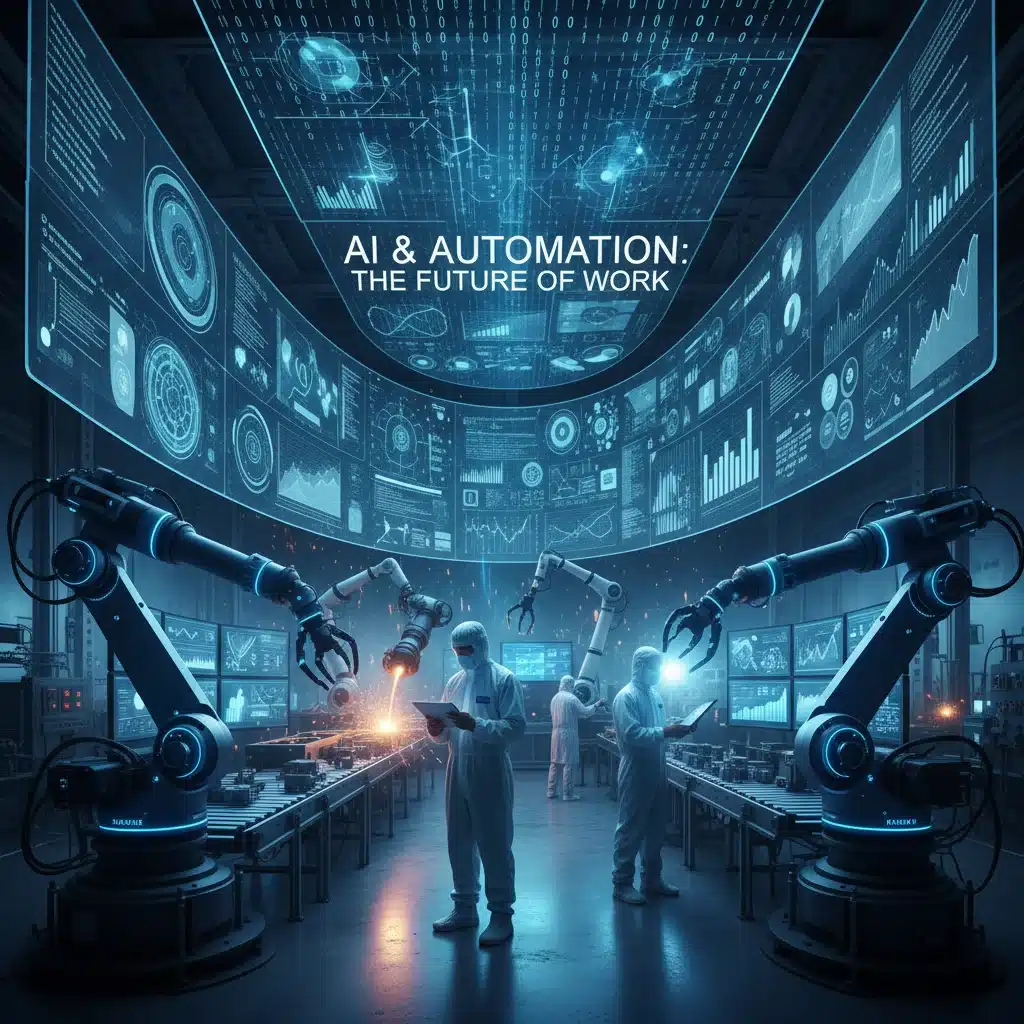
The rise of artificial intelligence and automation is perhaps the most discussed, and sometimes feared, aspect of the future of work. While it’s true that some routine and repetitive tasks will be automated, leading to displacement in certain roles, the overall impact on the 2026 Job Market is expected to be more nuanced. AI is not just replacing jobs; it’s augmenting human capabilities, creating new jobs, and transforming existing ones.
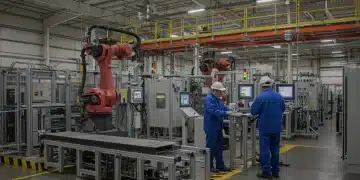
For instance, while AI can analyze vast datasets much faster than humans, the interpretation of those analyses, the ethical implications, and the strategic application of insights still require human judgment. Automation in manufacturing might reduce the need for certain manual labor, but it increases the demand for robotics engineers, maintenance technicians, and data analysts to optimize automated processes. The key is to view AI and automation as tools that can enhance productivity and allow humans to focus on higher-value, more creative, and interpersonal tasks.
The challenge for the 2026 Job Market will be managing this transition effectively. This requires robust reskilling and upskilling initiatives to help workers whose jobs are at risk transition into new roles. It also necessitates a focus on skills that are inherently human, such as creativity, critical thinking, and emotional intelligence, which are difficult for machines to replicate. Governments, educational institutions, and businesses must collaborate to ensure that the workforce is adequately prepared for this technological evolution, minimizing disruption and maximizing the benefits of AI and automation.
Geographical Shifts and Remote Work Trends
The pandemic fundamentally altered perceptions of where and how work can be done, accelerating the adoption of remote and hybrid work models. This trend is expected to continue shaping the 2026 Job Market. For many knowledge-based roles, geographical location is becoming less of a barrier, opening up talent pools for employers and offering greater flexibility for employees.
This shift has several implications. For cities, it may mean a re-evaluation of commercial real estate and urban planning. For individuals, it offers opportunities to live in more affordable areas while still accessing high-paying jobs. However, it also presents challenges, such as ensuring equitable access to technology and reliable internet, fostering team cohesion in distributed environments, and addressing potential issues of work-life balance when the boundaries between home and office blur. Countries and regions that actively foster digital infrastructure and supportive policies for remote work may become more attractive for businesses and skilled professionals in the 2026 Job Market.
The Role of Education and Lifelong Learning
In an ever-changing 2026 Job Market, the traditional model of education – completing a degree and then working for decades – is becoming increasingly obsolete. Lifelong learning is no longer a luxury but a necessity. Educational institutions, from universities to vocational schools, are adapting to offer more flexible, modular, and skills-focused programs. Micro-credentials, bootcamps, and online courses are gaining prominence as effective ways to acquire new skills quickly.
Employers are also playing a crucial role, investing in internal training programs and partnering with educational providers to reskill their workforces. Individuals must take proactive ownership of their learning journey, continuously seeking out opportunities to update their skills and knowledge. This proactive approach to skill development will be a key determinant of career longevity and success in the competitive 2026 Job Market. The ability to unlearn old methods and relearn new ones will be a defining characteristic of successful professionals.
Challenges and Opportunities in the 2026 Job Market
While the outlook for the 2026 Job Market presents many exciting opportunities, it is not without its challenges. The skills gap remains a significant concern, with a mismatch between the skills employers need and those available in the workforce. Addressing this requires concerted efforts from all stakeholders – governments, educators, and industries – to align curricula with industry demands and provide accessible pathways for upskilling and reskilling.
Another challenge is ensuring inclusivity and equity. As the job market evolves, there’s a risk that certain groups might be left behind, exacerbating existing inequalities. Policies and initiatives aimed at promoting diversity, equity, and inclusion (DEI) will be crucial to ensure that everyone has a fair chance to participate and succeed in the 2026 Job Market. This includes addressing systemic barriers, providing targeted support for underrepresented groups, and fostering inclusive workplace cultures.
Despite these challenges, the opportunities are immense. The growth of new industries, the potential for increased productivity through technology, and the capacity for more flexible and fulfilling work arrangements offer a positive vision for the future. Individuals who embrace continuous learning, cultivate adaptable skill sets, and remain open to new possibilities will find themselves well-equipped to thrive. For businesses, the ability to attract, retain, and develop talent will be a critical competitive advantage.
Conclusion: Preparing for the Future of Work
The 2026 Job Market will be characterized by dynamic change, driven by technological innovation, evolving economic landscapes, and a renewed focus on sustainability and human-centric values. While unemployment rates are generally expected to remain stable in many developed regions, significant growth will be concentrated in technology, healthcare, the green economy, e-commerce, and education sectors. The demand for critical skills such as digital literacy, problem-solving, creativity, adaptability, and emotional intelligence will only intensify.
Preparing for this future requires a proactive and continuous approach. For individuals, this means embracing lifelong learning, developing versatile skill sets, and being open to career transitions. For employers, it involves strategic workforce planning, investing in employee development, and fostering inclusive and agile work environments. For policymakers and educators, it entails designing responsive policies and curricula that equip the workforce with the knowledge and capabilities needed for tomorrow’s jobs. By understanding these trends and acting decisively, we can collectively shape a prosperous and equitable future of work in the 2026 Job Market.