2025 Energy Market: 10% Renewable Investment & US Economy
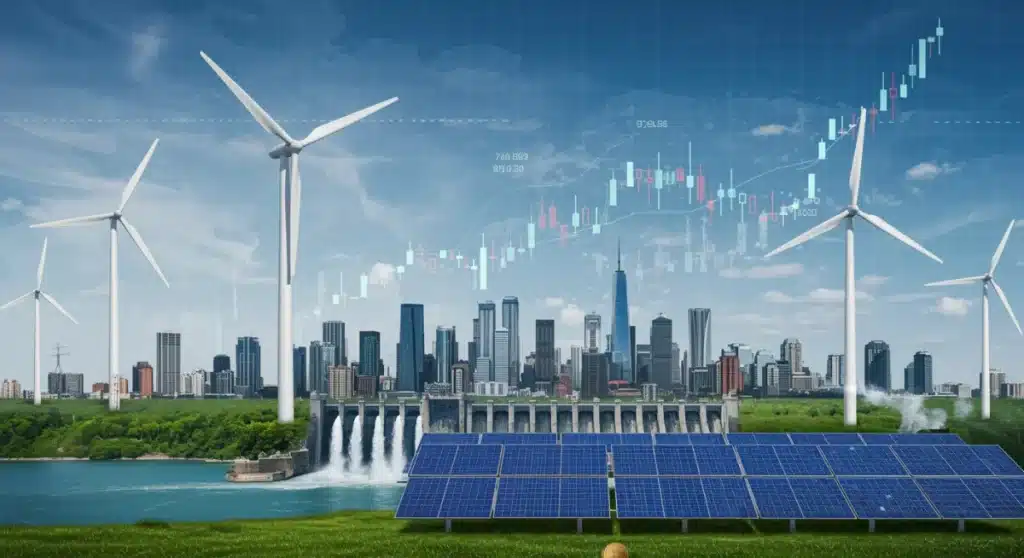
A projected 10% increase in renewable energy investment in 2025 will profoundly influence the US economy, driving innovation, creating jobs, and accelerating the transition towards a sustainable and energy-independent future.
The energy landscape is constantly evolving, and a significant shift is on the horizon. With a projected 10% increase in renewable energy investment in 2025, the United States stands at a pivotal moment. This anticipated surge promises to reshape not just how we power our homes and industries, but also the very fabric of the US economy, driving innovation, creating new opportunities, and fostering a more resilient future.
the driving forces behind renewable investment growth
Understanding the catalysts behind this projected 10% increase in renewable energy investment is crucial for grasping its full economic implications. Several converging factors are propelling this unprecedented growth, creating a fertile ground for sustainable development.
Government policies, technological advancements, and increasing corporate sustainability commitments are key players in this scenario. These elements combine to make renewable energy not only environmentally responsible but also economically attractive.
policy and regulatory support
Federal and state governments have been instrumental in fostering a favorable environment for renewable energy. Incentives and mandates play a significant role in encouraging investment.
- Investment tax credits (ITCs): These credits significantly reduce the upfront cost of solar and other renewable energy projects, making them more appealing to investors.
- Production tax credits (PTCs): Similar to ITCs, PTCs offer financial incentives based on the energy produced, supporting operational sustainability.
- Renewable portfolio standards (RPS): Many states have mandated a certain percentage of their electricity come from renewable sources, creating a steady demand for clean energy.
These policy frameworks provide a stable and predictable market for renewable energy developers and investors, reducing risk and encouraging long-term commitments. The consistency of these policies is vital for sustained growth.
technological advancements and cost reductions
Innovation has dramatically lowered the cost of renewable energy technologies, making them competitive with, and often cheaper than, traditional fossil fuels. This cost parity is a powerful incentive for increased investment.
For instance, the cost of solar photovoltaic panels has plummeted over the last decade, making solar power accessible to a wider range of consumers and businesses. Similarly, advancements in wind turbine design and efficiency have made wind power increasingly viable in diverse geographical locations. Battery storage technology, while still developing, is rapidly becoming more efficient and affordable, addressing one of renewable energy’s historical challenges: intermittency. These technological leaps are not just about efficiency; they are about making renewable energy a financially sound choice.
In conclusion, the confluence of supportive government policies, significant cost reductions, and continuous technological breakthroughs forms the bedrock of the projected 10% increase in renewable energy investment. These drivers create a robust and attractive market for capital, signaling a profound shift in the energy sector’s financial landscape.
economic impacts: job creation and sector growth
The anticipated 10% surge in renewable energy investment in 2025 is not merely an environmental triumph; it’s a powerful economic engine for the US. This influx of capital is expected to generate a substantial number of jobs across various sectors and stimulate significant growth within the renewable energy industry itself.
The ripple effect of this investment will be felt throughout the economy, from manufacturing and installation to research and development, creating a diverse range of employment opportunities.
direct and indirect job creation
The renewable energy sector is a prolific job creator. Direct jobs include roles in manufacturing, project development, construction, installation, operations, and maintenance of renewable energy facilities. These are often well-paying jobs that require specialized skills.
- Manufacturing: Production of solar panels, wind turbine components, and battery storage systems.
- Construction and installation: On-site assembly and deployment of renewable energy infrastructure.
- Operations and maintenance: Long-term upkeep and efficiency management of power plants.
Beyond these direct roles, indirect job creation is equally significant. This includes positions in sectors that supply goods and services to the renewable energy industry, such as raw material extraction, transportation, finance, and consulting. The demand for skilled labor will also boost educational and vocational training programs, further strengthening the workforce.
stimulation of related industries
A booming renewable energy sector inevitably stimulates growth in ancillary industries. The need for specialized components, advanced materials, and sophisticated software will drive innovation and investment in manufacturing and technology.
For example, the expansion of wind farms requires significant steel production, while solar installations depend on the semiconductor industry. Furthermore, the development of smart grids and energy management systems will create opportunities for IT and software development firms. This interconnectedness ensures that the economic benefits extend far beyond the immediate renewable energy industries, fostering a broader ecosystem of innovation and growth.
Ultimately, the projected increase in renewable energy investment is a clear pathway to robust job creation and widespread economic growth. It signifies a strategic shift towards a more diversified and resilient economy, capable of weathering future energy challenges and providing sustainable employment opportunities for a growing workforce.
energy independence and national security
The push for increased renewable energy investment extends beyond economic benefits and environmental stewardship; it is a critical component of strengthening America’s energy independence and national security. Reducing reliance on volatile global energy markets offers substantial strategic advantages.
By diversifying our energy portfolio and harnessing domestic resources, the US can insulate itself from geopolitical instability and price fluctuations, ensuring a more stable and predictable energy future.
reducing reliance on foreign energy sources
Historically, the US has been susceptible to the whims of international oil and gas markets, leading to economic vulnerabilities and foreign policy complexities. Renewable energy sources, being domestically abundant, offer a powerful antidote to this dependence.
Harnessing solar, wind, geothermal, and hydroelectric power means that a larger portion of our energy needs can be met within our borders. This reduces the outflow of capital to foreign energy producers and keeps energy dollars circulating within the US economy. Greater energy independence leads to increased economic stability and allows the nation to pursue its foreign policy objectives with greater autonomy.
strengthening energy infrastructure resilience
Decentralized renewable energy systems, such as rooftop solar and community microgrids, enhance the overall resilience of the national energy infrastructure. Unlike large, centralized power plants that can be vulnerable to single points of failure (e.g., natural disasters or cyberattacks), distributed renewable generation provides redundancy and localized power supply.
This distributed nature means that if one part of the grid goes down, other areas can remain operational, minimizing widespread blackouts and ensuring critical services continue to function. Investment in smart grid technologies, coupled with renewable energy, further optimizes energy distribution and enhances grid security against various threats.
In essence, the 10% increase in renewable energy investment directly translates into a more secure and resilient energy future for the US. It’s an investment not just in clean power, but in national stability and strategic autonomy, reducing external vulnerabilities and fortifying the nation’s critical infrastructure against future challenges.
challenges and opportunities for the us economy
While the projected 10% increase in renewable energy investment presents immense opportunities, it also comes with its share of challenges. Navigating these obstacles effectively will be key to maximizing the positive impact on the US economy and ensuring a smooth transition to a cleaner energy landscape.
Addressing infrastructure needs, workforce development, and regulatory hurdles will be crucial for fully realizing the potential of this investment surge.
infrastructure and grid modernization
Integrating a significantly larger share of renewable energy into the existing grid requires substantial upgrades and modernization. The current infrastructure, largely designed for centralized fossil fuel generation, often struggles with the intermittent nature of solar and wind power.
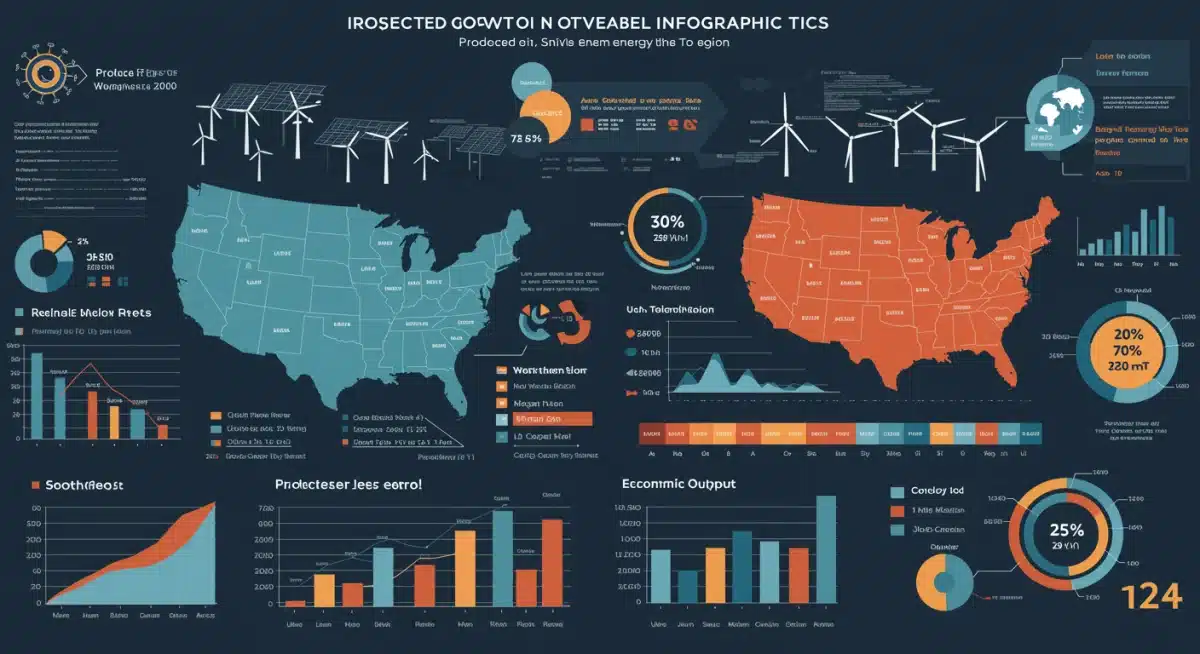
Investment will be needed in:
- Transmission lines: Building new lines to connect remote renewable energy sites to urban load centers.
- Energy storage: Deploying large-scale battery storage solutions to balance supply and demand.
- Smart grid technologies: Implementing advanced sensors, controls, and communication networks to optimize grid performance and reliability.
These infrastructure investments, while costly, also represent significant economic opportunities, creating jobs in engineering, construction, and technology development. Modernizing the grid is not just a necessity; it’s an economic stimulus in itself.
workforce development and reskilling
The rapid growth of the renewable energy sector will create a demand for new skills, necessitating a focus on workforce development and reskilling initiatives. While many jobs will be created, some traditional energy sector jobs may decline, requiring a strategic approach to transition workers.
Educational institutions, vocational schools, and government programs must collaborate to train a new generation of engineers, technicians, and installers proficient in renewable energy technologies. Investing in these programs ensures that the US workforce is equipped to meet the evolving demands of the energy market, preventing skill gaps and promoting inclusive economic growth. This proactive approach ensures that the benefits of the renewable transition are widely distributed and that no community is left behind.
In conclusion, while the path to a renewable energy future is not without its complexities, the opportunities for economic growth, job creation, and enhanced energy security far outweigh the challenges. Strategic planning and concerted efforts to address infrastructure and workforce needs will unlock the full potential of this transformative investment.
comparison with traditional energy investments
To fully appreciate the significance of a 10% increase in renewable energy investment, it’s essential to compare its economic characteristics and long-term implications with those of traditional fossil fuel investments. The differences highlight why this shift is not just environmentally preferable but also increasingly economically advantageous for the US economy.
Renewable energy offers distinct benefits in terms of cost stability, environmental impact, and long-term sustainability, contrasting sharply with the inherent volatility and external costs associated with fossil fuels.
cost stability and predictability
Traditional fossil fuel investments are subject to significant price volatility driven by global supply and demand, geopolitical events, and extraction costs. These fluctuations can lead to unpredictable energy bills for consumers and businesses, hindering economic planning.
In contrast, renewable energy sources like solar and wind have zero fuel costs once the infrastructure is built. While initial capital investment can be substantial, the operational costs are low and highly predictable over the lifespan of the project. This stability offers long-term economic certainty, making renewable energy an attractive proposition for investors and consumers alike. The increasing competitiveness of renewable energy on a levelized cost of energy (LCOE) basis further underscores this economic advantage.
environmental and social costs
Traditional energy sources carry significant environmental and social costs that are often externalized, meaning they are not directly borne by the producers or consumers of the energy. These include costs associated with air and water pollution, climate change impacts, and public health issues.
Renewable energy, by its very nature, significantly reduces these externalized costs. Investing in renewables means investing in cleaner air, healthier communities, and a more stable climate. While the immediate financial returns might be similar or even slightly lower in some cases compared to fossil fuels, the long-term societal and environmental benefits of renewables are overwhelmingly superior. These benefits translate into avoided healthcare costs, reduced climate-related disaster expenses, and enhanced quality of life, representing an invaluable economic return.
Ultimately, the comparison reveals that the projected increase in renewable energy investment represents a strategic economic decision for the US. It’s a move towards an energy system that offers greater cost stability, reduces environmental burdens, and fosters sustainable growth, positioning the nation for long-term prosperity and resilience.
global competitiveness and innovation
The 10% increase in renewable energy investment in 2025 is not just about domestic energy needs; it’s a powerful statement about the US’s commitment to global competitiveness and leadership in innovation. As the world transitions to a cleaner economy, nations that lead in renewable energy technology and deployment will gain significant economic and geopolitical advantages.
This investment positions the US at the forefront of the global green energy revolution, fostering a climate of innovation and creating new export opportunities.
leading in green technology development
Increased investment in renewable energy research and development (R&D) is crucial for maintaining a competitive edge. The US has a strong history of innovation, and this surge in funding can catalyze breakthroughs in next-generation solar cells, advanced wind turbine designs, efficient energy storage solutions, and smart grid technologies.
By investing heavily in these areas, the US can develop proprietary technologies that can be exported globally, creating new industries and high-value jobs. This leadership in green technology not only strengthens the domestic economy but also enhances the nation’s soft power and diplomatic influence on the international stage. It’s about setting global standards and driving future energy solutions.
export opportunities and international collaboration
As developing nations and other industrialized countries ramp up their renewable energy efforts, there will be a growing global market for US-developed technologies, expertise, and services. The projected investment lays the groundwork for the US to become a leading exporter of renewable energy solutions.
This includes exporting advanced manufacturing components, engineering services, project management expertise, and even financing models. Furthermore, this focus on renewables encourages international collaborations on climate change initiatives and technology transfer, strengthening alliances and promoting global stability. Participating actively in the global renewable energy market ensures long-term economic benefits and solidifies the US’s position as a responsible global actor.
In essence, the substantial investment in renewable energy is a dual strategy: it addresses domestic energy needs while simultaneously bolstering the US’s global competitiveness and fostering innovation. By leading the charge in green technology, the US can unlock new economic frontiers and secure its place as a key player in the global energy transition.
policy recommendations for sustained growth
To ensure the projected 10% increase in renewable energy investment in 2025 translates into sustained, long-term economic benefits for the US, strategic policy recommendations are essential. A proactive and adaptive policy framework can mitigate potential hurdles and maximize the positive impacts of this energy transition.
These recommendations focus on creating a stable investment environment, fostering innovation, and ensuring equitable access to the benefits of renewable energy.
long-term policy certainty
Investors thrive on predictability. While current incentives are effective, ensuring long-term policy certainty beyond 2025 is crucial for attracting sustained capital. This involves:
- Extending tax credits: Providing multi-year extensions for ITCs and PTCs to allow for more stable project planning.
- Clear regulatory pathways: Streamlining permitting processes and environmental reviews to reduce project delays and costs.
- Consistent carbon pricing signals: Implementing mechanisms that put a clear price on carbon emissions can further level the playing field for renewables.
Such certainty encourages larger, more ambitious projects and fosters a robust domestic supply chain, strengthening the US’s position in the global renewable energy market. Without it, investment can be sporadic and less impactful.
investment in research, development, and demonstration (RD&D)
Continued public and private investment in RD&D is vital for driving innovation and reducing future costs. This includes funding for:
- Next-generation technologies: Supporting breakthroughs in areas like advanced geothermal, tidal power, and enhanced energy storage.
- Grid modernization: Investing in smart grid technologies, cybersecurity for energy infrastructure, and distributed energy resource management.
- Circular economy principles: Researching methods for recycling and reusing renewable energy components to minimize waste.
These investments ensure that the US remains at the cutting edge of energy technology, creating new economic opportunities and maintaining a competitive advantage. Public-private partnerships can be particularly effective in accelerating these advancements.
In conclusion, a clear and consistent policy environment, coupled with robust investment in RD&D, will be pivotal in transforming the projected 10% increase in renewable energy investment into a cornerstone of the US economy. These strategic policy choices will ensure the nation’s sustained growth, environmental health, and energy security for decades to come.
| Key Aspect | Economic Impact |
|---|---|
| Job Creation | Significant growth in manufacturing, installation, and R&D roles, both direct and indirect. |
| Energy Independence | Reduces reliance on foreign energy, enhancing national security and economic stability. |
| Cost Stability | Zero fuel costs post-installation offer predictable, long-term energy prices. |
| Global Competitiveness | Positions the US as a leader in green technology, fostering innovation and export opportunities. |
Frequently asked questions about renewable energy investment
Initially, there might be some costs associated with grid upgrades. However, in the long term, increased renewable investment is expected to stabilize and potentially lower electricity prices due to zero fuel costs for solar and wind, reducing exposure to volatile fossil fuel markets.
The investment will create a wide array of jobs, including those in manufacturing, installation, operations, and maintenance of renewable energy systems. Additionally, indirect jobs in related sectors like engineering, finance, and technology will also see significant growth.
While renewables are becoming increasingly reliable, achieving 100% renewable power requires significant advancements in energy storage, grid modernization, and diverse renewable sources. The projected investment is a crucial step towards enhancing reliability through technological innovation and infrastructure improvements.
The shift towards renewables will likely lead to a gradual decline in reliance on traditional fossil fuels. This necessitates strategic planning for workforce transition and economic diversification in regions heavily dependent on traditional energy industries to ensure a just and equitable transition.
Government policies, such as tax credits, grants, and renewable portfolio standards, are fundamental in creating a stable and attractive market for renewable energy. Long-term policy certainty and continued support for research and development are crucial for sustaining and accelerating investment growth.
conclusion
The projected 10% increase in renewable energy investment in 2025 marks a transformative period for the US economy. This surge is set to drive substantial job creation, enhance energy independence, and solidify America’s position as a leader in green technology. While challenges related to infrastructure and workforce transition exist, strategic policies and continued innovation will pave the way for a more sustainable, resilient, and prosperous future. This investment is not just about powering our nation; it’s about building a stronger, cleaner economic foundation for generations to come.